Key facts
- BirdLife International's 2022 report finds that nearly half of all bird species are in decline and that more than one in eight are threatened.
- A 2019 study found that the United States and Canada lost nearly 3 billion birds over 50 years, and the 2022 US report found that over half of US species are declining.
- Grassland birds have fallen by 34 percent since 1970, while waterbirds and ducks have increased.
- Conservation can work: the California condor went from 22 birds to 273 by 2005, and the Mauritius kestrel from 4 in 1974 to about 800 in 2006.

Birds are among the best-monitored groups of wild animals, because so many people count them. That monitoring has produced a steady stream of bad news: declines in abundance that began long before any species disappeared. This note summarizes the global picture from BirdLife International’s 2022 report, the North American figures from the 2022 US State of the Birds report as covered by BirdLife, and the conservation history that Wikipedia records. It belongs to the science notes on the natural world.
The global picture
BirdLife’s State of the World’s Birds 2022 is a periodic review. Its headline findings are that nearly half of all bird species are in decline, and that more than one in eight are threatened with extinction. It frames the report around the post-2020 Global Biodiversity Framework and describes the present as a critical decade for action.
The report also stresses that conservation works. The BirdLife page points to examples of species saved by action, and the Wikipedia article on bird conservation provides some of the best-documented cases (below). The message is a mixed one: the overall trend is down, and the decline is not inevitable.
North America
The 2022 US State of the Birds report was written by 33 organizations. BirdLife’s account of it recalls the 2019 study showing that the United States and Canada lost nearly 3 billion birds over the previous 50 years. The 2019 study itself, read in its published manuscript, covers 1970 to 2017.
| Group | Finding in the 2022 US report |
|---|---|
| All US species | Over half are declining |
| Grassland birds | Down 34 percent since 1970 |
| Waterbirds and ducks | Increased |
| “Tipping point” species | 70 species that have lost half of their populations since 1970 |
| Hawaiian forest birds | Since 1778, nearly half of 78 endemic species and subspecies extinct or presumed extinct; the 10 most imperiled number fewer than 5,500 birds |
The contrast between waterbirds and the rest is the most instructive part: they increased where most other groups fell. The sources cited do not explain why in detail. For the wider climate context, see how climate change influences extreme weather.
What the 2019 study measured
The study behind the “3 billion” figure is Rosenberg and colleagues, “Decline of the North American avifauna,” published in Science in 2019. It integrated long-term survey trends and population size estimates for 529 species in the United States and Canada. Its main result is a net loss of 2.9 billion breeding birds (95 percent credible interval 2.7 to 3.1 billion) between 1970 and 2017, a reduction of 29 percent. Of the 529 species, 303 (57 percent) declined.
| Group in the 2019 study | Finding |
|---|---|
| Grassland birds | Down 53 percent, more than 700 million breeding birds across 31 species; 74 percent of grassland species declining |
| Forest biomes | Cumulative loss of more than 1 billion birds |
| Wetland birds | The only biome with a net gain, 13 percent, led by waterfowl up 56 percent |
| Introduced species (10 species) | Down 63 percent |
The authors stress that losses were not limited to rare species: many common, widespread birds fell, and declining native species were not replaced by species that thrive in human-altered landscapes. They attribute the waterfowl recovery to adaptive harvest management and large investments in wetland protection, and note raptors recovering after the DDT ban. A second, independent method, weather radar, showed nocturnal migratory biomass passage down by 13.6 percent (plus or minus 9.1) since 2007, mainly across the eastern United States. The 53 percent grassland figure here is the 2019 study’s continental estimate, and the 34 percent figure in the table above comes from the 2022 US report, so the two should not be compared directly.
Counting birds in the United Kingdom
The British Trust for Ornithology (BTO) publishes BirdTrends, an annual report built on data from many thousands of volunteer counters. It covers over 120 breeding species (121 in the 2022 edition), giving population, breeding performance and survival trends since monitoring began, with flags for declines above 25 percent or 50 percent over the latest 5, 10 and 25 years and the longest available period, usually 50 years. This note reports the structure of the scheme, not species trends, because the BirdTrends page read does not state them.
Causes
Wikipedia’s article on bird conservation lists habitat loss, the pesticides DDT and neonicotinoids, and climate change among the pressures. It counts 1,430 bird extinctions since the Late Pleistocene. The passenger pigeon, once present in the billions, is the best-known loss of recent centuries.
The sources cited do not rank the causes in numbers. This note therefore gives no percentages for any single cause.
Recoveries
Bird conservation also has a record of recoveries, which Wikipedia documents with population counts:
- The California condor fell to 22 individuals, and numbered 273 by 2005.
- The Mauritius kestrel rose from 4 individuals in 1974 to about 800 in 2006.
- The nene, the Hawaiian goose, rose from about 30 to over 500.
Institutions matter in these stories. Wikipedia names the National Audubon Society, founded in 1905, the Migratory Bird Treaty Act of 1918, BirdLife International, and the IUCN Red List as parts of the structure of bird protection.
How to read the numbers
Three cautions help with any headline about bird decline. First, an abundance decline is different from an extinction: a species can lose half of its population and still be common. Second, group averages hide winners and losers, as the duck example shows. Third, the baseline matters, because a decline measured from 1970 or over 50 years depends on where the count starts. The 3 billion figure is a net number, covering species that fell and species that rose.
What this note leaves out
This note does not give a full country-by-country breakdown, nor figures for Europe, Asia or Africa, because the sources cited cover mostly the global headline and the United States. It omits the share of threatened species affected by agriculture, forest loss and other threats. It also omits specific trends for UK farmland and woodland birds. The figures from the 2022 US State of the Birds report are given as summarised by BirdLife. Wikipedia’s recovery figures come from its summaries of conservation records and were not checked against the programs’ own reports.
What remains open
The central question is whether the current conservation effort is large enough. The BirdLife report calls the present a critical decade, and the successes it points to are the evidence that targeted work changes outcomes. How much more is needed, and who pays, is a policy question that the counts alone cannot settle. Museum collections, discussed in how do you immortalise natural history?, are a related source of historical evidence.
About the image
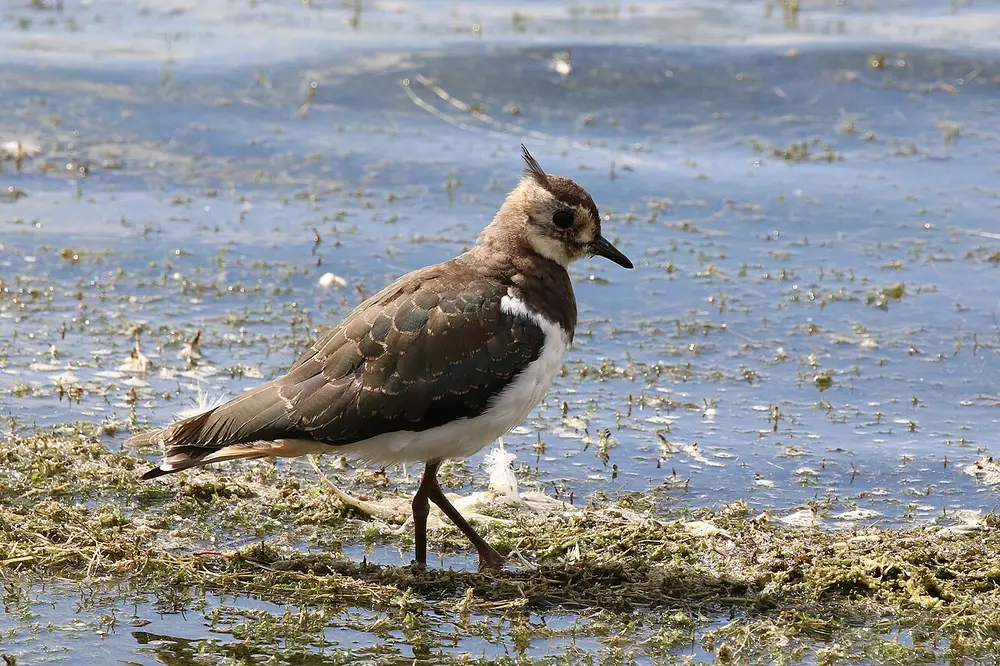
The image shows a northern lapwing at Standlake Pit 60 in Oxfordshire, England. It is an illustration of a wild bird only, and the sources cited do not give lapwing population figures.
Frequently asked questions
How many bird species are declining?
BirdLife International's State of the World's Birds 2022 reports that nearly half of all bird species are in decline, and that more than one in eight are threatened with extinction.
How many birds has North America lost?
BirdLife's account of the 2022 US report says that the United States and Canada lost nearly 3 billion birds over the previous 50 years, based on a 2019 study. More than half of US species are declining.
What did the 2019 Science study actually measure?
Rosenberg and colleagues combined long-term survey data for 529 species in the United States and Canada and found a net loss of 2.9 billion breeding birds between 1970 and 2017, a 29 percent reduction. It counted breeding populations only, so the authors call their estimate conservative.
Which birds are doing well?
Waterbirds and ducks have increased in the United States. The BirdLife account of the US report presents them as the exception among habitats, where most groups declined.
What threatens birds?
The sources cited name habitat loss, pesticides such as DDT and neonicotinoids, and climate change. Wikipedia's article on bird conservation lists these together.
Sources and open data
- State of the World's Birds 2022, BirdLife International
- New report reveals widespread losses of birds in all U.S. habitats, except for one, BirdLife International
- Decline of the North American avifauna (Rosenberg et al., Science, 2019), Science, author manuscript via NSF Public Access Repository
- Major findings, 3 Billion Birds, Cornell Lab of Ornithology and partners
- BirdTrends, British Trust for Ornithology
- Bird conservation, English Wikipedia