Key facts
- Wu is written 吴 in simplified and 吳 in traditional characters, 7 strokes either way. It was the 9th most common surname of mainland China in the 2019 official ranking.
- Tradition traces it to the ancient state of Wu in the lower Yangtze, said to have been founded by Taibo, an elder son of King Tai of Zhou.
- The same character is Ng in Cantonese and Hakka, Goh / Go / Ngo in Hokkien and Teochew, Woo in Shanghainese, Ngô in Vietnamese and Oh (오) in Korean.
- The 2010 US Census counted 71,721 people named Wu, 33,005 named Ngo and 31,210 named Ng, but Wu also covers other characters such as 胡 (Cantonese Wu).
吴
吳
Pinyin: Wú
Simplified / traditional: 吴 / 吳
Rank in mainland China: 9 of the top 100 (Ministry of Public Security, 2019 report)
Characters and spellings of 吴
| Unicode code point | U+5434 (traditional 吳: U+5433) |
|---|---|
| Stroke count | 7 (traditional: 7) |
| Radical (simplified form) | No. 30 ⼝, plus 4 strokes |
| Dictionary meaning (Unihan) | one of warring states; surname |
Romanizations by Chinese language
| Language | System | Spelling |
|---|---|---|
| Mandarin | Hanyu Pinyin (PRC standard) | Wú |
| Mandarin | Wade-Giles (Taiwan, older English texts) | Wu |
| Cantonese | Jyutping (Unihan) | ng4 |
| Cantonese | Hong Kong / common spellings | Ng, Ung, Eng |
| Hokkien (Min Nan) | Pe̍h-ōe-jī and common spellings | Gô͘, Ngô͘ (X, Q, K, T), Goh |
| Hakka | Pha̍k-fa-sṳ and common spellings | Ǹg, Ng |
| Gan | Romanization and common spellings | Ng |
| Wu (Shanghainese) | Romanization and common spellings | Wu, Ng, Eng Woo |
Equivalent surnames in other languages
| Language | Form |
|---|---|
| Vietnamese | Ngô |
| Korean | Oh (오) |
| Japanese | Go / Kure |
| Filipino | Go, Ngo, Goh, Wu, Gozon, Gozum, Gochian, Gokongwei, Gosiengfiao |
| Misc | Woo |
These spellings in the 2010 US Census
| Spelling | People | US rank | Asian / Pacific Islander |
|---|---|---|---|
| WU | 71,721 | 461 | 96.37% |
| NGO | 33,005 | 1,062 | 96.46% |
| NG | 31,210 | 1,125 | 93.2% |
| WOO | 13,003 | 2,775 | 86.86% |
| ENG | 10,682 | 3,352 | 77.38% |
| UNG | 4,519 | 7,369 | 91.79% |
| GO | 4,370 | 7,607 | 86.61% |
| GOH | 1,528 | 18,208 | 87.76% |
| GOZUM | 284 | 69,170 | 82.75% |
| GOZON | 118 | 141,140 | 76.27% |
Counts are people recorded with each spelling among the 265,667,228 people with a surname shared by at least 100 people (US Census Bureau, 2010, public domain). A spelling is not proof of Chinese origin: the last column shows the share of bearers who identified as Asian or Pacific Islander. Together these spellings total 170,440 people, but some of them belong to unrelated surnames (for example English Lee, Hmong Vang or Vietnamese Ly). Search any spelling with the US census surname lookup.
Stroke order
Animation by the open-source Hanzi Writer library (MIT) with stroke data from Make Me a Hanzi (Arphic Public License). Stroke order tool for any character.
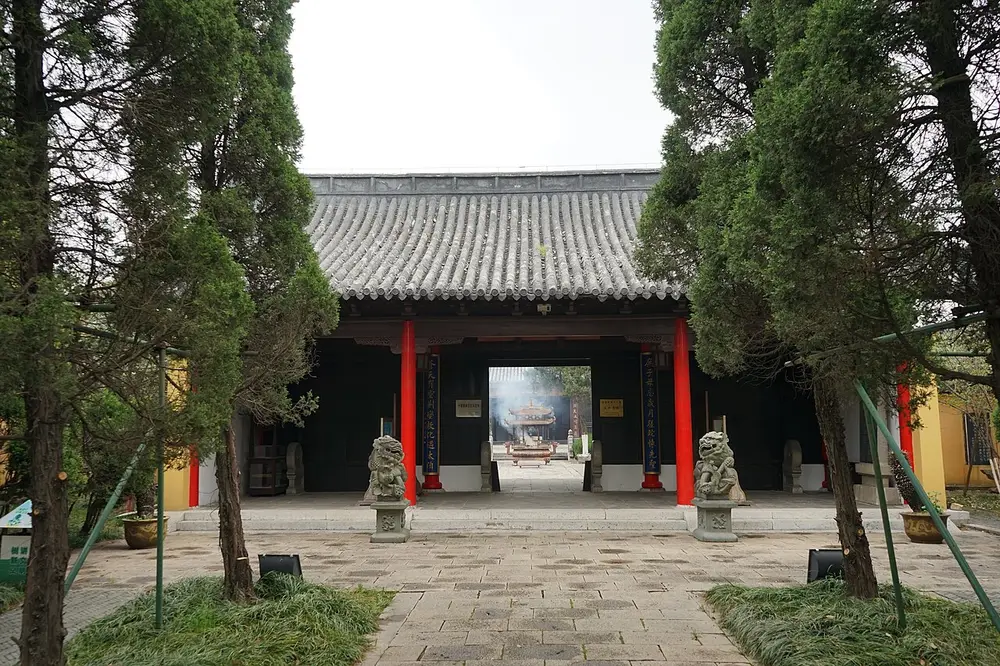

Wu (吴, traditional 吳) is a Chinese surname named after the ancient state of Wu in the Yangtze delta. It is pronounced wú, like “woo” with a rising tone, and is spelled Ng in Cantonese and Hakka, Goh, Go or Ngo in Hokkien and Teochew, Woo in Shanghainese, Ngô in Vietnamese and Oh in Korean. With roughly 27 million bearers it was the 9th most common surname of mainland China in the Ministry of Public Security’s 2019 ranking.
Meaning of the character 吴
The Unihan database gives 吴 a short gloss: “one of warring states; surname”. CC-CEDICT adds the regional sense: the area of southern Jiangsu, northern Zhejiang and Shanghai, still called the Wu region, whose dialects are known as Wu Chinese. Both the simplified 吴 and the traditional 吳 have 7 strokes and sit under radical 30 (口, mouth); the difference is only in how the lower part is drawn.
When introducing themselves, Chinese speakers often say kǒu tiān Wú (口天吴), “mouth-sky Wu”, describing the character as 口 over 天. Chinese Wikipedia points out that the lower part is historically 夨 (zè), not 天, but the phrase stuck, partly because it separates 吴 from 胡 (Hu), which sounds close to Wu in several southern dialects.
Origin: Taibo and the state of Wu
The traditional account, repeated by genealogies and summarized by both English and Chinese Wikipedia, starts with the Zhou royal house, whose ancestral surname was Ji (姬):
- Taibo and Zhongyong. King Tai of Zhou wanted his youngest son Jili, and through him his grandson Chang (the future King Wen), to inherit. The two elder sons, Taibo (泰伯) and Zhongyong (仲雍), stepped aside and went south-east to the lower Yangtze, where the local people made Taibo their ruler. The state they founded was called Gouwu (句吳), later simply Wu.
- The Wu kingdom. Wu grew powerful in the Spring and Autumn period under King Helü, with the general Wu Zixu and Sun Tzu in his service. Its first capital was at Meili, in modern Wuxi.
- The surname. After Wu was conquered by the neighboring state of Yue, descendants of its rulers took the name of the lost state as their surname. Chinese Wikipedia adds that most modern Wus are said to descend from Ji Zha (季札), a prince of Wu who refused the throne.
Because Wu and Zhou both trace back to the house of Ji, Wikipedia notes that the surnames Wu 吴, Zhou 周 and Ji 姬 are historically related in genealogical tradition. See the Zhou surname page for the other branch.
Smaller traditional origins include a descent from the sage king Shun through the fief of Yu (虞), whose name sounded like Wu, and adoption of the name by Miao, Xibe and other non-Han peoples. These are traditional accounts from genealogies and old histories, not documented descent; where Chinese surnames come from explains how to read them.
Why one character gives Wu, Ng, Goh and Oh
Linguists reconstruct the Old Chinese reading of 吳 with an initial ng- sound, and Middle Chinese as roughly nguo. Mandarin dropped that initial; the southern languages kept it in some form. That is the whole story behind the spellings:
| Spelling | Language and where it is used | Example |
|---|---|---|
| Wu | Mandarin, Hanyu Pinyin and Wade-Giles | Wu Cheng’en, novelist |
| Ng | Cantonese and Hakka (Hong Kong, Guangdong, Malaysia) | Andrew Ng, computer scientist |
| Goh, Go, Ngo | Hokkien and Teochew (Singapore, Malaysia, Philippines, Taiwan) | Goh Chok Tong, Singapore |
| Woo | Shanghainese and older Wu-dialect spellings | |
| Eng, Ung | Older Cantonese and Taishanese spellings in North America | |
| Ngô | Vietnamese | Ngô Đình Diệm |
| Oh (오) | Korean | |
| Go | Japanese on’yomi | Go Seigen, Go player |
The Cantonese Ng is unusual: a syllable made only of a nasal consonant, with no vowel. The Hong Kong Cantonese spellings guide explains it, and the Hokkien and Teochew guide covers Goh and Go. Chinese Wikipedia also notes that Fuzhou families in Malaysia write the name Ngu. The Philippines adds compound names built on Go, such as Gozon and Gozum, discussed in the Filipino-Chinese surnames guide.
The English spelling Wu is ambiguous. Pinyin Wu also writes the rarer surnames 武, 伍, 巫 and 邬, and in Cantonese Wu or Woo is the usual spelling of 胡 (Mandarin Hu). The surname finder lists every character a spelling can stand for.
Wu, Ng and Ngo in the United States
The 2010 US Census file, which lists every surname with at least 100 bearers, gives:
- Wu: 71,721 people (rank 461, 96.4% Asian or Pacific Islander). This total also includes families of 胡 Hu who use the Cantonese spelling, and bearers of 武 and 伍.
- Ngo: 33,005 (96.5%), almost entirely Vietnamese Ngô.
- Ng: 31,210 (93.2%), the Cantonese form, common among Hong Kong and Malaysian families.
- Woo: 13,003 (86.9%), shared with 胡 and with Korean names.
- Eng: 10,682 (77.4%) and Ung: 4,519 (91.8%), older Cantonese and Taishanese forms.
- Go: 4,370 and Goh: 1,528, Hokkien forms, many from the Philippines and Singapore.
Korean Americans named Oh (18,285 people in 2010, 95.5% Asian or Pacific Islander) mostly carry the same character: in South Korea, 오 is usually written 吳, and Chinese Wikipedia cites a 2015 Korean census figure of 763,281 people. Add the forms together and 吳 is one of the most widespread East Asian surnames in America, even though no single spelling shows it. The US census lookup tool gives the figure for any spelling.
Famous people named Wu
- Wu Cheng’en (吳承恩, c. 1500 to 1582), Ming dynasty writer to whom Journey to the West is traditionally attributed.
- Wu Sangui (吳三桂, 1612 to 1678), Ming general who opened the Shanhai Pass to the Manchus in 1644 and later rebelled against the Qing.
- Chien-Shiung Wu (吳健雄, 1912 to 1997), Chinese-American physicist known for the Wu experiment on parity violation and for her work on the Manhattan Project.
- Ngô Đình Diệm (吳廷琰, 1901 to 1963), first president of South Vietnam, an example of the Vietnamese form.
- Momofuku Ando (1910 to 2007), inventor of instant noodles, born Go Pek-hok (吳百福) in Taiwan: Go is the Hokkien reading.
- Goh Chok Tong (吳作棟, born 1941), prime minister of Singapore from 1990 to 2004.
- Andrew Ng (吳恩達, born 1976), British-American computer scientist, co-founder of Google Brain.
- Daniel Wu (吳彥祖, born 1974), Hong Kong-American actor.
Distribution in China
According to a 2013 study cited by Wikipedia, Wu was borne by about 26.8 million people, 2.0% of China’s population, with Guangdong the province with the most Wus. In Taiwan, Chinese Wikipedia ranks it 7th. Its historical heartland, the Wu region around Suzhou and Wuxi, still carries the name. The 100 most common surnames in China puts Wu in context.
Related surnames and confusions
- Zhou 周 and Ji 姬: linked to Wu by the Taibo legend; see the Zhou page.
- Hu 胡: written Wu or Woo in Cantonese; see the Hu page.
- Ng 伍 and 吳: in Cantonese, 伍 (Mandarin Wǔ) is also romanized Ng, so a Hong Kong Ng can be either.
- Wu is the 6th name in the Hundred Family Surnames, the Song dynasty primer.
Frequently asked questions
What does the surname Wu 吴 mean?
The Unihan database glosses 吴 as one of the Warring States and a surname. It is the name of the ancient state of Wu in the Yangtze delta, and the surname is traditionally taken from that state rather than from an everyday word.
How do you pronounce Wu?
In Mandarin it is wú, like the English woo with a rising second tone. The Cantonese form Ng is a single nasal sound, the ng of sing said on its own; English speakers often approximate it as ung.
Is Ng the same surname as Wu?
Usually yes. Ng is the Cantonese and Hakka reading of 吳, the character Mandarin speakers read as Wu. A family named Ng from Hong Kong and a family named Wu from Shanghai can write their name identically.
Is Wu a Chinese or Korean surname?
Both. The character 吳 is Chinese in origin; in Korea it is read 오 and usually spelled Oh. Vietnamese has it as Ngô. The spelling Wu in English, however, almost always points to a Chinese family.
Are Wu 吴 and Hu 胡 the same surname?
No. They are different characters, but in Cantonese 胡 is also spelled Wu or Woo, so the English spelling alone cannot tell them apart. Chinese speakers often say 口天吴 (mouth and sky Wu) to make clear which one they mean.
Sources and open data
- Unihan database entry for U+5434 吴, Unicode Consortium
- Frequently Occurring Surnames from the 2010 Census, US Census Bureau
- Wu (surname), English Wikipedia
- 吴姓 (Wu surname), Chinese Wikipedia
- Wu (state), English Wikipedia
- Taibo, English Wikipedia