Key facts
- A 2006 survey of 296 million people in mainland China found about 4,100 surnames; Xinhua put the total in use at a little over 4,000 in 2007.
- Historical records list close to 12,000 surnames, including those of non-Han peoples, so about three in four have disappeared.
- The classic Hundred Family Surnames lists only 504: 444 single and 60 compound surnames.
- The 100 most common surnames, less than 5% of those in existence, are shared by about 85% of the population.
- Taiwan counted 1,785 surnames in 2023, 740 of them with fewer than 10 bearers; the 2010 US Census recorded 6.3 million different surnames.

“How many Chinese surnames are there?” has several correct answers, because the figure depends on what is counted: surnames in use today, surnames ever recorded, or the classic list learned by children. This page sets out each number, where it comes from, and why the stock of Chinese surnames is small and still shrinking.
Three different counts
| What is counted | Number | Source |
|---|---|---|
| Surnames in use in mainland China | about 4,100 | survey of 296 million people by Yuan Yida, 2006 |
| Surnames in use in mainland China | a little over 4,000 | Xinhua, 2007 |
| Surnames in use in mainland China | about 3,100 | The Economist, 1995 |
| Surnames ever recorded, including non-Han | close to 12,000 | cited by English Wikipedia |
| Surnames in the Hundred Family Surnames | 504 | Song dynasty text |
| Surnames in Taiwan | 1,785 | Ministry of the Interior, 2023 |
The counts of names in use vary between 3,100 and 4,100 because they come from different samples and years, and because rare surnames held by a few families are easy to miss or to count twice when a character has variant forms. For a working figure, about 4,000 surnames are in use in mainland China.
The historical figure of close to 12,000 includes surnames used by non-Han peoples and names found only in old texts. Compared with the roughly 3,100 used today in English Wikipedia’s account, it means a reduction of almost four to one.
The Hundred Family Surnames: 504 names
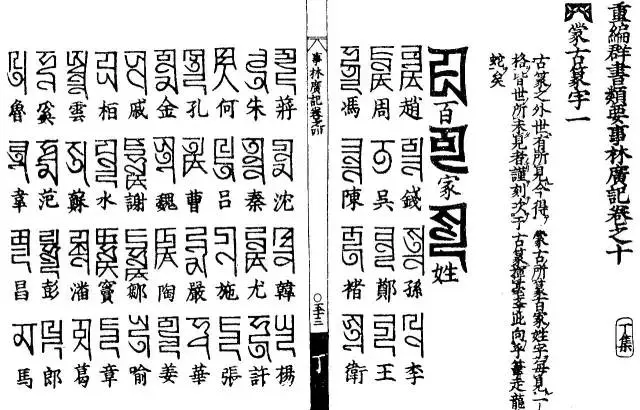
The best-known list is the Hundred Family Surnames (百家姓), a Song dynasty rhyming text used to teach children to read. Despite its title, it contains 504 surnames: 444 single-character names and 60 compound ones. It is a cultural text, not a census, and its order reflects the politics of its time rather than how common each name was. The Hundred Family Surnames guide explains its history.
Why the number keeps shrinking
English Wikipedia notes that an “evolutionary dwindling” of surnames is common to all societies. When a surname passes only through some children, each family line has a chance of ending in every generation, and over centuries many small surnames disappear while large ones keep growing. Chinese surnames are very old, so this effect has had more than two thousand years to work.
Chinese history added other causes:
- Adopting the ruler’s surname. Families sometimes took the surname of the ruling house, as a reward or to show loyalty, which moved people from small surnames into large ones such as Li under the Tang.
- Simplified characters. When characters were simplified, some distinct surnames came to be written with the same character. See simplified and traditional surname characters.
- Name taboos. A character in the emperor’s personal name could not be written, so families who shared it had to change surname. Many Zhuang families became Yan under the Han, as told on the Zhuang page.
- Rare characters. Surnames written with characters that are hard to type or print, such as Shan (𢒉), have become very rare. See rare characters in names.
Compound surnames, with two characters, were especially affected: many have become rare, and only a few, such as Ouyang and Sima, remain common.
A few names for many people
The small number of surnames means each one is shared by a very large number of people. According to English Wikipedia, the 100 most common surnames, less than 5% of those in existence, are shared by 85% of the population. In 2019 Wang and Li each had more than 100 million bearers, and each of the 23 most common surnames had more than 10 million. The most common surnames in China page gives the full ranking.
The top of the list is also very stable. The same ten surnames lead in the 1982 census, in the 2006 survey of 296 million people and in the Ministry of Public Security report of April 2007. Because each of these names is held by tens of millions of people, the ranking changes very slowly from one count to the next.
Taiwan and the United States
Taiwan publishes an exact count. On 30 June 2023 its Ministry of the Interior listed 1,785 surnames, 1,667 single and 118 compound, among 23.4 million residents. 740 of them had fewer than 10 bearers each, while the ten most common covered 52.79% of the population. The statistics count written forms, so variant characters such as 黄 and 黃 appear separately. See the most common surnames in Taiwan.
The United States shows the opposite pattern. The 2010 Census recorded about 6.3 million different surnames, 3.9 million of which appeared only once, and the ten most common covered only 4.9% of the population. Immigration from every part of the world and the free creation of spellings explain the difference. See Chinese surnames in the US Census.
| Population | Surnames counted | Top 10 share |
|---|---|---|
| Mainland China (2006 survey) | about 4,100 | not given in the sources used here |
| Taiwan (2023) | 1,785 | 52.79% |
| United States (2010) | about 6.3 million | 4.9% |
Where the surnames came from
Most Chinese surnames go back to the Zhou dynasty and earlier, when they came from fiefs, states, official titles, posthumous names and ancestors’ personal names. The guide where Chinese surnames come from explains these origins, and the methodology page describes the data used across this site.
Frequently asked questions
How many Chinese surnames are there?
It depends on what is counted. About 4,000 surnames are in use in mainland China today, according to a 2006 survey of 296 million people and to Xinhua in 2007. Historical sources record close to 12,000, and Taiwan counted 1,785 in 2023.
Why are there so few Chinese surnames compared with Western ones?
Chinese surnames are very old and have been passed down for more than two thousand years, while new ones were rarely created. Over time many small surnames died out, families adopted the names of rulers, and some names merged when characters were simplified. The result is a small set of names shared by a very large population.
Does the Hundred Family Surnames list all Chinese surnames?
No. The book, written in the Song dynasty, lists 504 surnames as a rhyming text for children. Many common modern surnames are in it, but thousands of others are not, and some of its names are now very rare.
Are Chinese surnames disappearing?
Slowly, yes. Every surname that passes only to some children tends to disappear over enough generations, a pattern seen in all societies. In Taiwan, 740 of the 1,785 surnames counted in 2023 had fewer than 10 bearers each.
Sources and open data
- Chinese surname, English Wikipedia
- Hundred Family Surnames, English Wikipedia
- List of common Chinese surnames, English Wikipedia
- 全國姓名統計分析 (National name statistics, 2023), Department of Household Registration, Ministry of the Interior (Taiwan)
- Frequently Occurring Surnames from the 2010 Census, US Census Bureau