Key facts
- Chinese surnames have been passed from father to child for roughly two thousand years, and that is still the norm in mainland China.
- Article 1015 of the PRC Civil Code says a person shall take the father's or the mother's surname, with three listed exceptions.
- In Taiwan, Article 1059 of the Civil Code requires the parents to agree in writing before the birth is registered; if they do not, the household registration office draws lots.
- English Wikipedia reports that only 1.1 million people in China bore both parents' surnames in 2018, up from 118,000 in 1990.
- The surname chosen at registration is a legal choice, so it should be checked before documents such as a passport are issued.
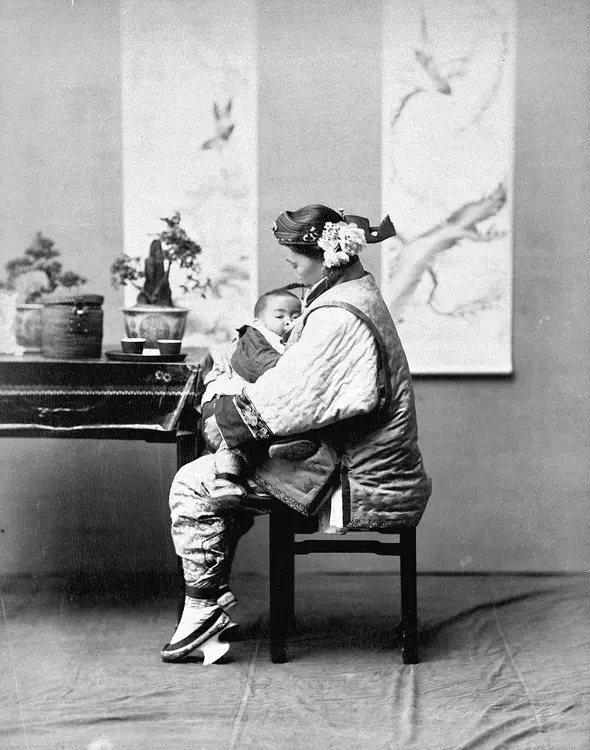

A Chinese child takes the father’s or the mother’s surname. In mainland China, Article 1015 of the Civil Code says so in its first clause. In Taiwan, Article 1059 of the Civil Code makes it a written agreement between the parents, settled by lottery if they cannot agree. In practice the father’s surname is still the usual outcome, because the Chinese surname has been patrilineal for about two thousand years.
What the PRC Civil Code says
Article 1015 of the Civil Code of the People’s Republic of China, in the Part on personality rights, reads as follows in the text on Chinese Wikisource:
自然人应当随父姓或者母姓,但是有下列情形之一的,可以在父姓和母姓之外选取姓氏:(一)选取其他直系长辈血亲的姓氏;(二)因由法定扶养人以外的人扶养而选取扶养人姓氏;(三)有不违背公序良俗的其他正当理由。
In plain English, a person must take the father’s surname or the mother’s surname. Another surname is allowed only in three cases:
| Case | Wording in the article |
|---|---|
| 1 | The surname of another lineal elder relative by blood (选取其他直系长辈血亲的姓氏) |
| 2 | The surname of a person who raises the child without being the legal supporter (因由法定扶养人以外的人扶养而选取扶养人姓氏) |
| 3 | Another proper reason that does not offend public order and good morals (有不违背公序良俗的其他正当理由) |
English Wikipedia’s article on Chinese names makes the same point more simply. A child traditionally inherits the father’s surname, this is still the norm in mainland China, and the marriage law explicitly states that a child may use either parent’s surname. The article quoted above does not say that the two parents must agree in writing or by any procedure. It only fixes the options: the father’s line, the mother’s line, and the three exceptions.
What the Taiwan Civil Code says
Taiwan puts the choice in the family part of its Civil Code. Article 1059, as published by the Ministry of Justice, says the parents must agree in writing, before the child’s birth is registered, whether the child takes the father’s or the mother’s surname. The article then sets out what follows:
| Situation | Rule in Article 1059 |
|---|---|
| Parents agree in writing before birth registration | The child takes the surname they chose |
| No agreement, or the agreement fails | The household registration office (戶政事務所) decides by drawing lots (抽籤) |
| Child still a minor after registration | The parents may change the surname to the father’s or the mother’s by written agreement |
| Child is an adult | The child may change to the father’s or the mother’s surname |
| Number of changes | Each of these two changes is limited to one time |
| Court change | A court may change the surname for the child’s benefit if the parents divorced, one or both died, one or both have been missing for three years, or one parent clearly failed in the duty to protect or raise the child |
The difference with the mainland is procedural. Taiwan makes the parents decide on paper, with a lottery as the backstop, and it allows a later change. The PRC text lists the permitted surnames and the exceptions. Both texts start from the same two options, father or mother.
How often children take both surnames
How many Chinese children take the mother’s surname alone is not something this site can state, because none of the sources cited for this page gives a figure. The double surname is better documented. English Wikipedia’s article on Chinese surnames says that the system is patrilineal, that some people have recently opted to use both parents’ surnames, and that the practice, though increasing, is still relatively uncommon: 1.1 million people had both parents’ surnames in 2018, up from 118,000 in 1990.
A combined surname can look like a compound surname, such as Ouyang or Sima, but it is a different thing. A compound surname is a single historical unit that has been passed down as one name. A combined surname joins two surnames that belong to two different families. The given name follows in both cases, and the usual surname-first order applies. For how parents pick that given name, see choosing a Chinese name.
Why a mother and her children often have different surnames
A Chinese woman does not normally change her surname when she marries. English Wikipedia describes this as the traditional rule, and notes that in places with more Western influence, such as Hong Kong, a married woman may add her husband’s surname to her own. The page gives the example of Lam Cheng Yuet-ngor, whose original surname was Cheng and to whom the surname Lam was legally added after her marriage. The custom is covered in more detail in married women and surnames.
The result is a household where the mother, with her own surname, raises children who usually carry the father’s. It is not an irregularity. It also explains why a family tree built on surnames follows the paternal line only: the mother’s surname is lost at the next generation unless the child receives it.
The historical background
The same English Wikipedia article explains the older system. Two kinds of ancient name existed, the xing (姓), which were matrilineal in origin, and the shi (氏), which were patrilineal. The two terms were later used interchangeably, and by the Han dynasty, when everyone had a xing, the surname was transmitted from the father. Marriage between people of the same surname stayed forbidden, which is the subject of the same-surname marriage taboo. The page also mentions that some matrilineal surnames in Taiwan may have arisen under Japanese occupation, when such practice was more common there.
This history is why the modern legal wording is notable. A clause that says “the father’s surname or the mother’s surname” puts the two lines on the same footing, in a culture where the origin of surnames goes back to patrilineal clans.
Practical points for paperwork
The surname decided at birth registration is the one that later appears on identity papers and travel documents, so it is worth checking the choice before those are issued. If the child has a surname from the mother’s side, or two surnames, check in advance how the Latin spelling will be written. The spelling depends on the romanization system and the place: see Chinese names on passports and the Wade-Giles spellings common in Taiwan. To look up the spellings of a given surname, use the surname finder.
A family living outside China is also subject to the law of its country of residence, which may offer other options than the two statutes above. This page does not cover those laws, and the two statutes quoted here are cited from their published text only.
Frequently asked questions
Can a Chinese child take the mother's surname?
Yes. Article 1015 of the PRC Civil Code says a person shall take the father's surname or the mother's surname. In Taiwan, Article 1059 of the Civil Code says the parents agree in writing, before birth registration, whether the child follows the father or the mother.
What happens in Taiwan if the parents cannot agree?
Article 1059 says that if nothing is agreed, or the agreement fails, the household registration office decides by drawing lots. The surname can later be changed to the father's or the mother's, once, as the article allows.
Can a child take a surname that is neither the father's nor the mother's?
In mainland China, only in the cases listed in Article 1015: the surname of another lineal elder relative by blood, the surname of a person who raised the child without being the legal supporter, or another proper reason that does not offend public order and good morals.
Can a Chinese child have both parents' surnames?
It is possible but uncommon. English Wikipedia says some Chinese people use both parents' surnames, and counts 1.1 million of them in 2018. The two statutes quoted on this page do not describe the registration of a combined surname, so check with the registry office.
Does a Chinese wife take her husband's surname?
Traditionally no. English Wikipedia says Chinese women generally keep their own surname after marriage, though some, for example in Hong Kong, add the husband's surname. This is why a mother and her children often have different surnames.
Sources and open data
- 中华人民共和国民法典/第四编 人格权, Chinese Wikisource
- 民法 第1059條, Ministry of Justice, Taiwan, Laws and Regulations Database
- Chinese surname, English Wikipedia
- Chinese name, English Wikipedia