Key facts
- Liu is written 刘 in simplified and 劉 in traditional characters, 6 strokes against 15. The old meaning of the character is a kind of battle axe; today it is used only as a surname.
- It ranked fourth in mainland China in the Ministry of Public Security's 2019 report; a 2013 study counted about 67.7 million bearers.
- It was the surname of the Han dynasty emperors (202 BC to AD 220) and of Liu Bei's Shu Han.
- Other spellings: Lau (Cantonese), Lew, Liew (Hakka), Lao (Filipino Chinese), Lưu (Vietnamese), Yu / Ryu (Korean).
- The 2010 US Census counted 78,370 people named Liu (95.6% Asian or Pacific Islander), 29,792 Lau and 15,702 Luu.
刘
劉
Pinyin: Liú
Simplified / traditional: 刘 / 劉
Rank in mainland China: 4 of the top 100 (Ministry of Public Security, 2019 report)
Characters and spellings of 刘
| Unicode code point | U+5218 (traditional 劉: U+5289) |
|---|---|
| Stroke count | 6 (traditional: 15) |
| Radical (simplified form) | No. 18 ⼑, plus 4 strokes |
| Dictionary meaning (Unihan) | surname; kill, destroy |
Romanizations by Chinese language
| Language | System | Spelling |
|---|---|---|
| Mandarin | Hanyu Pinyin (PRC standard) | Liú |
| Mandarin | Wade-Giles (Taiwan, older English texts) | Liu |
| Cantonese | Jyutping (Unihan) | lau4 |
| Cantonese | Hong Kong / common spellings | Lau, Lao, Lou, Lưu |
| Hokkien (Min Nan) | Pe̍h-ōe-jī and common spellings | Lâu, Lau, Low, Lao |
| Hakka | Pha̍k-fa-sṳ and common spellings | Liù, Liew |
| Gan | Romanization and common spellings | Liu, Lew, Lieu |
| Wu (Shanghainese) | Romanization and common spellings | Lieu, Lio |
Equivalent surnames in other languages
| Language | Form |
|---|---|
| Vietnamese | Lưu |
| Korean | Yu/Yoo (유) |
| Filipino | Lao, Lew, Liu |
| Japanese | Ryū |
These spellings in the 2010 US Census
| Spelling | People | US rank | Asian / Pacific Islander |
|---|---|---|---|
| LIU | 78,370 | 411 | 95.62% |
| LAU | 29,792 | 1,187 | 76.07% |
| LUU | 15,702 | 2,324 | 96.48% |
| LOW | 12,032 | 2,979 | 28.82% |
| LEW | 7,410 | 4,775 | 71.5% |
| LAO | 5,897 | 5,856 | 84.06% |
| LIEU | 3,612 | 9,045 | 95.1% |
| LOU | 2,945 | 10,815 | 79.66% |
| LIEW | 1,017 | 24,572 | 93.41% |
| LIO | 516 | 42,094 | 38.95% |
Counts are people recorded with each spelling among the 265,667,228 people with a surname shared by at least 100 people (US Census Bureau, 2010, public domain). A spelling is not proof of Chinese origin: the last column shows the share of bearers who identified as Asian or Pacific Islander. Together these spellings total 157,293 people, but some of them belong to unrelated surnames (for example English Lee, Hmong Vang or Vietnamese Ly). Search any spelling with the US census surname lookup.
Stroke order
Animation by the open-source Hanzi Writer library (MIT) with stroke data from Make Me a Hanzi (Arphic Public License). Stroke order tool for any character.

Liu (刘, traditional 劉) is the fourth most common surname in mainland China, with roughly 68 to 70 million bearers, and the surname of the emperors of the Han dynasty. The character once named a kind of axe but today serves only as a family name. It is pronounced liú, one syllable, roughly “lyoh” with a rising tone. It is spelled Lau in Hong Kong Cantonese, Lew, Liew or Lieu in Hakka and older American usage, Lao among Filipino Chinese, Lưu in Vietnamese and Yu or Ryu in Korean.
Meaning of the character 刘 / 劉
Unihan’s gloss is short: “surname; kill, destroy”. The English Wikipedia article adds that 劉 originally meant “battle axe”. The traditional character has 15 strokes: 卯 and 金 (metal) on the left, the knife radical 刂 on the right. Simplification replaced the whole left side with 文, producing the 6-stroke 刘, one of the most drastic reductions among common surnames. Our simplified and traditional characters guide puts it in context.
In spoken Chinese the surname is often identified as 文刀刘, “wen-knife Liu”, after the two parts of the simplified form, or as 卯金刀 in the traditional form.
Origin: the dragon keeper and the state of Liu
Both main traditions start from Liu (劉), a place in today’s Henan.
- Liu Lei the dragon keeper (Qi 祁 line). According to legend, King Kong Jia of the Xia received two dragons from heaven and hired Liu Lei, a descendant of the sage king Yao, to raise them. Liu Lei was rewarded with the fief of Liu and took its name. When the female dragon died, he served its meat to the king, and fled when the king asked for more, settling at Luyang (today’s Lushan county, Henan). Tradition counts him as the first Liu and as the ancestor of Liu Bang. The Tang historian Liu Zhiji disputed the descent from Yao, as Chinese Wikipedia notes.
- The state of Liu (Ji 姬 line). In 592 BC, King Ding of Zhou granted Liu to a younger royal brother, known as Duke Kang of Liu, who founded a small state there. His descendants took the state’s name.
- Granted and adopted names. Liu Bang granted his surname to Xiang Bo, who had saved him at the Hongmen banquet, and to his adviser Lou Jing. Because Han princesses were married to Xiongnu rulers, many Xiongnu nobles later claimed the Liu name; the Han-Zhao state of the 4th century was founded by such a Xiongnu Liu. Under the Northern Wei, the Xianbei Dugu clan became Liu.
These accounts are traditional and partly mythical. They explain the prestige of the name more than any family’s real descent.
Why the Han made Liu big
Liu Bang, a man of peasant birth, founded the Han dynasty in 202 BC. The Han ruled, with one interruption, until AD 220, and gave their name to the Han Chinese and to hanzi, Chinese characters. Royal kinsmen were enfeoffed across the empire, and the imperial surname was granted to allies. After the Han, Liu families founded or ruled Shu Han, Han-Zhao, Liu Song, the Later Han, the Northern Han and the Southern Han. Chinese Wikipedia counts some 27 Liu choronyms, of which Pengcheng (彭城, today’s Xuzhou, Jiangsu, near Liu Bang’s birthplace) is the most famous. On choronyms and hall names, see clan associations.
How Liu is spelled around the world
| Spelling | Source | Example |
|---|---|---|
| Liu | Hanyu Pinyin, Wade-Giles | Liu Cixin, Lucy Liu |
| Lau | Hong Kong Cantonese (lau4) | Andy Lau |
| Lew, Lieu | Hakka, Gan, Taishanese-era US spellings | Chinese American families |
| Liew | Hakka (Malaysia, Singapore) | Malaysian Chinese |
| Lao, Low | Hokkien, Filipino Chinese | Philippines, Malaysia |
| Lưu | Vietnamese | Vietnam |
| Yu, Ryu (유, 류) | Korean | South Korea |
| Ryū | Japanese |
Liu is one of the few surnames that Wade-Giles and pinyin write the same way, so the spelling Liu itself does not separate mainland from Taiwanese families. The southern spellings come from the dialect guides: Hong Kong Cantonese, Hakka and Hokkien and Teochew. The Korean pair Yu and Ryu reflects the South Korean rule that drops an initial r before yu.
Liu in the United States
In the 2010 census file:
- Liu: 78,370 people (rank 411), 95.6% Asian or Pacific Islander.
- Lau: 29,792 (76.1%), mostly Hong Kong and Cantonese families. The lower Asian share shows that some American Laus have other origins.
- Luu: 15,702 (96.5%), the Vietnamese form.
- Lew: 7,410 (71.5%); Lao: 5,897 (84.1%); Lieu: 3,612; Liew: 1,017.
- Low: 12,032, but only 28.8% Asian or Pacific Islander: most Lows are of English or Scottish origin, not Liu.
Adding only the high-confidence spellings (Liu, Luu, Lieu, Liew) already gives about 98,700 people. The US census lookup lets you test any other spelling, and the US census analysis explains how to handle mixed ones like Low.
Distribution in China
According to the 2019 report, Liu was fourth nationally and the most common surname in Jiangxi; Chinese Wikipedia adds that it is second in Hunan. A 2013 study, which ranked it fifth, found about 67.7 million bearers (5.1% of the population), with Shandong the province with the most Lius. In Taiwan it ranks eighth. See the most common surnames in China.
In the Hundred Family Surnames, a Song dynasty primer, Liu sits far down at position 252, a reminder that the text is not ordered by frequency.
Famous people named Liu
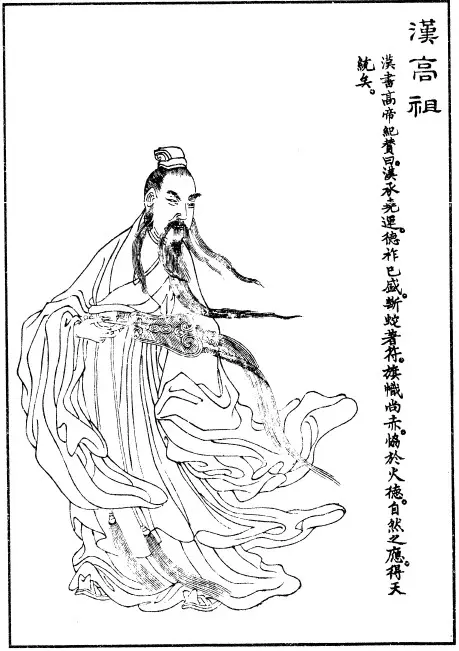
- Liu Bang (劉邦, 256 or 247 to 195 BC), Emperor Gaozu, founder of the Han dynasty, shown above in a Qing woodblock print.
- Liu Bei (劉備, 161 to 223), founding emperor of Shu Han, one of the Three Kingdoms.
- Liu Xiaobo (劉曉波, 1955 to 2017), literary critic and human rights activist, Nobel Peace Prize laureate in 2010.
- Liu Cixin (劉慈欣, born 1963), science fiction writer, author of The Three-Body Problem, published in English as Cixin Liu.
- Liu Yang (劉洋, born 1978), the first Chinese woman in space, on Shenzhou 9 in 2012.
- Andy Lau (劉德華, born 1961), Hong Kong actor and singer, an example of the Cantonese spelling.
- Lucy Liu (劉玉玲, born 1968), American actress.
Related surnames and confusions
- 柳 Liu (willow) is a different, smaller surname with the same pinyin but a different tone (liǔ).
- Lau and Lao can stand for other characters; the surname finder lists them.
- Compare with Chen 陈 and Zhang 张, the neighbors of Liu in the national ranking.
Frequently asked questions
What does the surname Liu mean?
The character 劉 is glossed as a weapon, a kind of axe, and as a verb meaning to kill or destroy, but those senses are long obsolete. Today 刘 is used almost only as a surname, and its traditional origin is a place name in Henan.
How do you pronounce Liu?
It is liú, one syllable, roughly lyoh, close to the name Leo squeezed into one beat, with a rising second tone. It is not pronounced lee-you in two syllables.
Is Lau the same surname as Liu?
Usually. Lau is the Hong Kong Cantonese spelling of 劉 (Jyutping lau4), as in Andy Lau. In the US census some Lau families are of other origins, so the spelling alone is not proof.
Is Liu a Korean surname?
The same character exists in Korea, read Yu or Ryu (유, 류). It should not be confused with other Korean Yu surnames written with different characters, such as 兪 and 庾.
Sources and open data
- Unihan database entry for U+5218 刘, Unicode Consortium
- Frequently Occurring Surnames from the 2010 Census, US Census Bureau
- Liu, English Wikipedia
- 刘姓 (Liu surname), Chinese Wikipedia
- Emperor Gaozu of Han, English Wikipedia
- Liu, family name (Q804970), Wikidata