Key facts
- London's Natural History Museum holds about 80 million items, and its digital collections programme, begun in 2014, aims to digitize them and release the data openly.
- In the United States, the iDigBio portal passed 100 million specimen records in 2017, drawing on more than 1,900 collections at about 820 institutions.
- Digitizing is a sequence of steps, data entry, imaging, georeferencing and sharing through an aggregator, and cost and curator culture are the main obstacles.
- Digitized records have been used to study invasive species, pollinators and anthrax in fungal collections, among other questions.

Natural history museums keep the physical evidence of life on Earth: pinned insects, pressed plants, skins, bones and fossils, collected over centuries. Most of it sits in drawers and cabinets where only a few specialists can look at it. Digitization is the effort to turn that material into searchable data. This note describes what the process involves, the scale of two flagship programs, and the uses that have been reported, based on the museums’ own pages and on Wikipedia. It belongs to the science notes on the natural world.
Why collections matter
Wikipedia’s article on natural history collections explains that they support taxonomy, the naming and classification of species, and the study of long-term trends, including the effects of climate change. A specimen records a species at a place and a time that nobody can revisit. That is why old collections are valuable evidence for questions that nobody anticipated when the specimen was collected, such as how the ranges of species have shifted. For a related reading of long-term bird data, see wild birds in crisis.
London: 80 million items
The Natural History Museum in London states on its digital collections programme page that its collection comprises about 80 million items. Wikipedia gives about 70 million, a difference this note reports without resolving. The programme began in 2014 and aims to release the data openly. The museum’s page lists some of the pieces:
| Collection | Figure given by the museum |
|---|---|
| Pinned insects | Over 25 million |
| Microscope slides | About 2.5 million |
| British and Irish butterflies and moths (pilot) | More than 500,000 |
| Herbarium sheets | 70,000 images |
| Darwin’s fossil mammals | 3D scans, including Toxodon and Megatherium |
The museum links the effort to biodiversity conservation, human health and mineral resources. The choice of a pilot on butterflies and moths shows a strategy: start with a group that is well studied and has many users, and learn how to scale up.
The United States: iDigBio
In the United States the effort is coordinated through iDigBio, the national digitization program. The Florida Museum reported on 19 July 2017 that its portal had passed 100 million specimen records. It describes more than a billion specimens held in collections worldwide and more than 1,900 collections at about 820 institutions contributing data, about 1,300 of them US collections.
The article gives the typical sequence of work:
- Entering the label data into a database.
- Imaging the specimen.
- Georeferencing, that is, converting a description such as “two miles north of town” into coordinates.
- Sharing the records through an aggregator, so that they can be searched together.
The same article names the obstacles: cost, and the culture among curators.
What the records have been used for
The Florida Museum article lists uses that show how unlike each other they can be. Records helped researchers track the spread of lionfish and other invasive species, and study pollinators. They were used to examine the effect of World War II on insect collecting. They also supported a study of anthrax in microfungal collections.
Wikipedia’s Biodiversity Heritage Library article describes a parallel effort for books. The library was founded in 2006, offers open access, and holds over 59 million pages. Specimens and literature complement each other, because a species name in a specimen record can be traced to the publication that described it. The Global Biodiversity Information Facility, described on Wikipedia as a source of free and open biodiversity data, is another aggregator in this ecosystem.
Limits of the digital copy
A record is not a specimen. An image does not reveal everything that DNA or chemistry might, and some questions require the physical object. The museums still need to store and protect the original. In that sense, digitization is a complement to preservation rather than a way to “immortalize” what is stored.
Digitization is also uneven. The programs above show that large figures can coexist with slow progress for the whole: the London programme describes an effort that began in 2014 and remains in progress, and its pages give counts for particular collections, not for the whole of the 80 million. For an older chapter in the history of science, see the physicists of Florence.
What this note leaves out
This note does not give the share of the world’s specimens that have been digitized, because no primary source for a reliable global figure is cited here. It does not report the cost per specimen, the economics of digitization, or the technical standards for images and data. It gives no later iDigBio counts beyond the 2017 article. It also leaves out ethical questions about collections, such as the provenance of specimens and the sharing of benefits with the countries of origin.
What remains open
The main uncertainty is how much has been done, and how much remains. The counts available mix records, images and specimens, and they are produced at different dates by different programs. Another open question is long-term funding for the portals. The Florida Museum article treats cost as a barrier from the start.
About the image
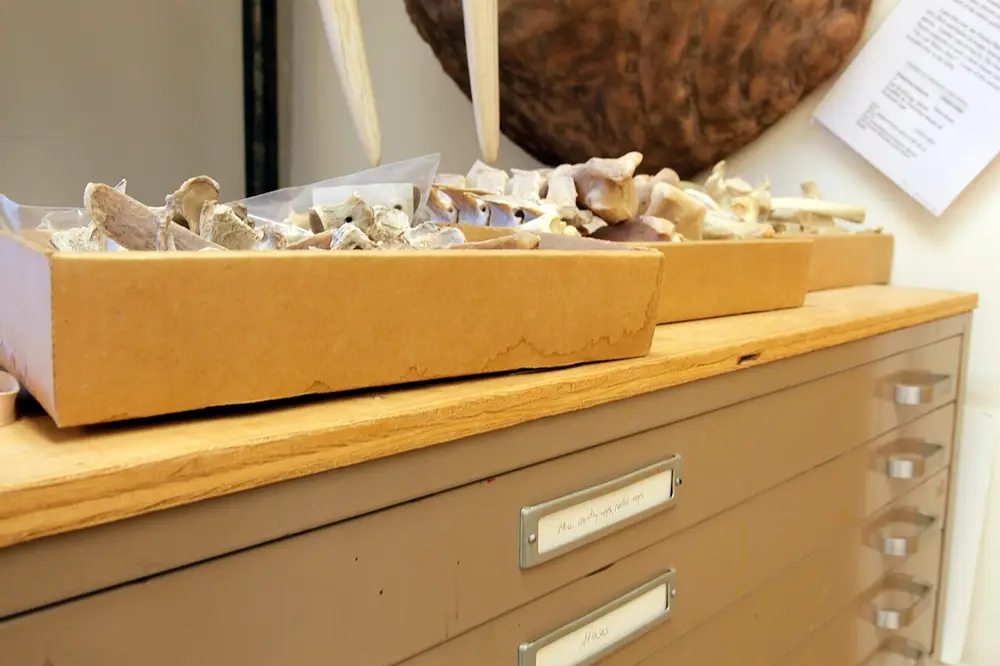
The image shows specimen drawers and bones in the mammalogy collection of the Burke Museum of Natural History and Culture, with a taxidermied walrus in the background. It shows the physical form of the collections that digitization is meant to open to more researchers.
Frequently asked questions
What does digitizing a natural history collection mean?
It means creating a database record for each specimen, usually with an image and with the place it was collected, and publishing that record so that researchers anywhere can find it. A physical specimen is not replaced, it is described.
How big is the Natural History Museum collection?
The museum's digital collections page gives about 80 million items. Wikipedia's article on natural history collections gives a lower figure of about 70 million, so the number depends on the source and the date.
Why do researchers use old specimens?
They record where and when a species was found. According to Wikipedia, collections support taxonomy and the study of long-term trends, including the effects of climate change.
What is iDigBio?
It is the US national portal for digitized museum specimen records. A 2017 Florida Museum article reported that it had passed 100 million records.
Sources and open data
- Digital collections programme, Natural History Museum, London
- Museum digitization program iDigBio rockets past 100 million specimen records, Florida Museum of Natural History
- Natural history collection, English Wikipedia
- Biodiversity Heritage Library, English Wikipedia