Key facts
- Lü is written 吕 in simplified script (6 strokes) and 呂 in traditional script (7 strokes), and pronounced lǚ, with the rounded ü of German über.
- English has no letter for ü, so the name appears as Lü, Lyu, Lu or Lv. A 2012 Chinese standard allows Lyu where the umlaut cannot be typed, as on passports.
- It comes from the ancient state of Lü, held by a branch of the Jiang clan. Its most famous early member is Lü Shang, better known as Jiang Ziya.
- It ranks 47th in mainland China in the Ministry of Public Security's 2019 report and 22nd in the Hundred Family Surnames.
- Other spellings include Lui and Loi (Cantonese), Loo, Lu and Luy (Hokkien, Philippines), Lữ or Lã (Vietnamese) and Yeo (Korean 여).
吕
呂
Pinyin: Lǚ
Simplified / traditional: 吕 / 呂
Rank in mainland China: 47 of the top 100 (Ministry of Public Security, 2019 report)
Characters and spellings of 吕
| Unicode code point | U+5415 (traditional 呂: U+5442) |
|---|---|
| Stroke count | 6 (traditional: 7) |
| Radical (simplified form) | No. 30 ⼝, plus 3 strokes |
| Dictionary meaning (Unihan) | surname; a musical note |
Romanizations by Chinese language
| Language | System | Spelling |
|---|---|---|
| Mandarin | Hanyu Pinyin (PRC standard) | Lǚ |
| Mandarin | Wade-Giles (Taiwan, older English texts) | Lü |
| Cantonese | Jyutping (Unihan) | leoi5 |
| Cantonese | Hong Kong / common spellings | Lui, Loi |
| Hokkien (Min Nan) | Pe̍h-ōe-jī and common spellings | Lū (X, T), Lī (Z, K), Lǐr (Q), Lee, Leu, Ler, Loo |
| Hakka | Pha̍k-fa-sṳ and common spellings | Lî, Lee |
| Gan | Romanization and common spellings | Liê |
| Wu (Shanghainese) | Romanization and common spellings | Li, Lee |
Equivalent surnames in other languages
| Language | Form |
|---|---|
| Vietnamese | Lữ / Lã |
| Korean | Yeo/Ryeo / (여/려) |
| Japanese | Ryo |
| Filipino | Lu, Loo, Luy |
These spellings in the 2010 US Census
| Spelling | People | US rank | Asian / Pacific Islander |
|---|---|---|---|
| LEE | 693,023 | 21 | 42.22% |
| LI | 111,786 | 273 | 96.78% |
| LU | 35,628 | 978 | 95.74% |
| LA | 6,655 | 5,242 | 88.91% |
| LUI | 6,156 | 5,641 | 90.19% |
| LOO | 3,645 | 8,977 | 68.09% |
| LEU | 2,459 | 12,587 | 36.76% |
| LOI | 1,357 | 19,814 | 89.02% |
| LIE | 1,083 | 23,472 | 72.39% |
| LUY | 667 | 34,073 | 58.92% |
Counts are people recorded with each spelling among the 265,667,228 people with a surname shared by at least 100 people (US Census Bureau, 2010, public domain). A spelling is not proof of Chinese origin: the last column shows the share of bearers who identified as Asian or Pacific Islander. Together these spellings total 862,727 people, but some of them belong to unrelated surnames (for example English Lee, Hmong Vang or Vietnamese Ly). Search any spelling with the US census surname lookup.
Stroke order
Animation by the open-source Hanzi Writer library (MIT) with stroke data from Make Me a Hanzi (Arphic Public License). Stroke order tool for any character.
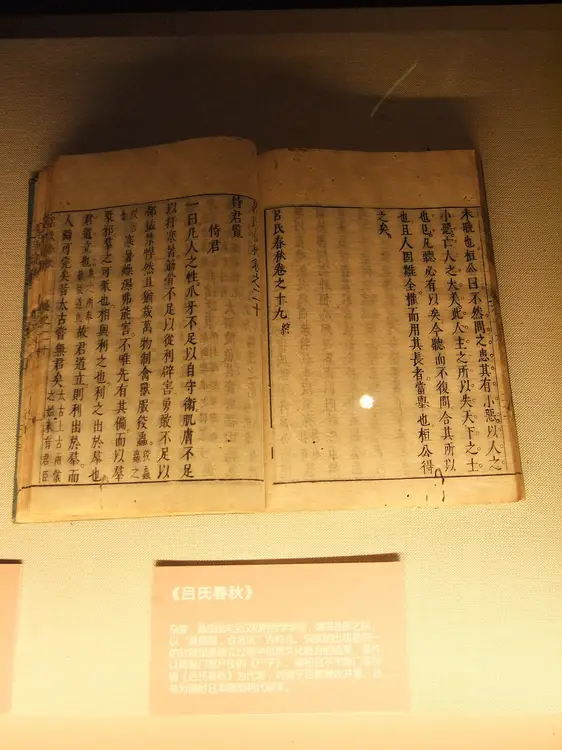

Lü (吕, traditional 呂) is a Chinese surname pronounced lǚ, with the rounded vowel of German über and a low dipping tone. It ranks 47th in mainland China in the 2019 official list. Because English has no letter for ü, the same name appears as Lü, Lyu, Lu or Lv, and it is easily confused with other surnames spelled Lu. Outside the mainland it is spelled Lui or Loi (Cantonese), Loo, Lu or Luy (Hokkien and the Philippines), Lữ or Lã (Vietnamese) and Yeo (Korean 여).
Meaning of the character 吕
吕 looks like two mouths stacked one above the other, but the shape has nothing to do with 口. The Shuowen Jiezi, a dictionary of the 2nd century, explains 呂 as a picture of two vertebrae, a spine. The traditional form 呂 joins the two boxes with a small slanting stroke, which the simplified form drops, so the stroke count goes from 7 to 6.
The character also names a set of musical pitch pipes: 律吕 (lǜlǚ) was the old term for the twelve standard pitches of Chinese music, which is why the Unihan database glosses 吕 as “surname; a musical note”. The surname itself comes from a place name.
Lü, Lyu, Lu or Lv: the umlaut problem
The vowel ü is a normal part of pinyin, but it causes trouble in names:
| Spelling | Where it comes from | Where you meet it |
|---|---|---|
| Lü / Lǚ | standard pinyin and Wade-Giles | books, scholarly texts, Wikipedia |
| Lyu | Chinese national standard of 2012 | passports, recent official documents |
| Lu | umlaut dropped | older passports, Taiwan, most English media |
| Lv | keyboard shortcut for ü | email addresses, usernames |
According to English Wikipedia, the Standardization Administration of China issued rules for spelling personal names in pinyin on 31 October 2011, in force from 1 February 2012. They allow ü to be written yu when the umlaut cannot be used, which gives Lyu. Before that, many people from the same family ended up with Lu on one document and Lv on another.
Dropping the umlaut has a cost. Lu is also the spelling of Lu 卢, Lu 陆, 鲁 and 路, so a person named Lu in an English text could belong to any of five surnames. The guide to Chinese names on passports and the pinyin for names guide explain the rules in more detail.
Origin: the state of Lü and Jiang Ziya
Chinese genealogies trace the main line to the Jiang (姜) clan, said to descend from the legendary Yan Emperor. A branch of the Jiang was given the state of Lü, which by the late Western Zhou lay in the Nanyang basin of southern Henan. During the Spring and Autumn period the state of Chu annexed it, and many of its people adopted the state’s name as a surname.
The most famous early member of the clan is Lü Shang, known to most Chinese as Jiang Ziya (姜子牙). He was the general who helped the Zhou defeat the Shang around 1046 BC and was then given the state of Qi in Shandong. Legend says the future King Wen found him fishing with a straight hook and no bait, waiting for a lord worthy of his talents. Because he carried both the clan name Jiang and the lineage name Lü, he is honored as an ancestor by both families; see the page on Jiang 姜.
A second line comes from the Ji (姬) clan. Wei Qi, son of the Jin minister Wei Wuzi, received a fief called Lü, and some of his descendants took that name. This ties the surname to the house of Wei 魏. In the Northern Wei, the Xianbei Chilü (叱吕) clan also shortened its name to Lü. See where Chinese surnames come from for how such names formed.
How Lü is spelled around the world
| Spelling | Language or system | Where you meet it |
|---|---|---|
| Lui / Loi | Cantonese (leoi5) | Hong Kong, older US families |
| Lu / Loo / Luy | Hokkien, Filipino Chinese | Taiwan, Singapore, Philippines |
| Lee / Leu / Ler | other Hokkien and Teochew readings | Malaysia, Singapore |
| Lữ / Lã | Vietnamese | Vietnam |
| Yeo / Ryeo (여 / 려) | Korean | Korea |
| Ryo | Japanese | Japan |
Lü in the United States
The US Census does not record diacritics, so Lü never appears as such. The 2010 figures for the spellings that can stand for 吕 are:
- Lu: 35,628 people (95.7% Asian or Pacific Islander), shared with 卢, 陆, 鲁 and 路.
- Lui: 6,156 people (90.2%), the Cantonese spelling.
- Loo: 3,645 people (68.1%), also an English name and a Hokkien spelling of other surnames.
- Loi: 1,357 people (89.0%), and Luy: 667 (58.9%).
Lee (693,023) and Li (111,786) appear in the data panel as Hokkien and Wu readings, but they are overwhelmingly Li 李 or English Lee. The US census surname lookup shows these overlaps.
Famous people named Lü
- Lü Buwei (吕不韦, died 235 BC), merchant who became chancellor of Qin and sponsored the Lüshi Chunqiu, the encyclopedic book shown above.
- Empress Lü (吕雉, 241 to 180 BC), wife of the Han founder Liu Bang and the effective ruler of China after his death.
- Lü Bu (吕布, died 199), warlord of the late Han, remembered in the Romance of the Three Kingdoms as its greatest fighter.
- Lü Meng (吕蒙, 178 to 220), general of Eastern Wu.
- Lü Dongbin (吕洞宾), one of the Eight Immortals of Taoist legend.
- Annette Lu (呂秀蓮, born 1944), vice president of Taiwan from 2000 to 2008, an example of the spelling without umlaut.
Related surnames and pages
- For the surnames that share the spelling Lu, see Lu 卢 and Lu 陆.
- Korean readings are covered in Korean surnames and Chinese characters.
- The surname finder lists every character behind a spelling such as Lu or Lui.
- See the full ranking in the 100 most common surnames in China.
Frequently asked questions
Is Lü the same surname as Lu?
Not in Chinese. Lü 吕 has the vowel ü, while Lu 卢, 陆, 鲁 and 路 have a plain u. But without the umlaut all of them are written Lu in English, so a person named Lu may belong to any of these families.
Why is Lü sometimes written Lv?
On Chinese keyboards the letter v is used to type ü, because v is not otherwise used in pinyin. Lv therefore appears in email addresses, usernames and some documents. It is not an official spelling.
What is the official passport spelling of 吕?
A Chinese national standard on writing personal names in pinyin, in force since 1 February 2012, allows ü to be written yu when the umlaut is not available, giving Lyu. Older documents often show Lu or Lv.
What does the character 吕 mean?
The Shuowen Jiezi, a dictionary of the 2nd century, explains it as a picture of the spine. It also names a set of musical pitch pipes, 律吕. As a surname it comes from the ancient state of Lü.
Sources and open data
- Unihan database entry for U+5415 吕, Unicode Consortium
- Frequently Occurring Surnames from the 2010 Census, US Census Bureau
- Lü (surname), English Wikipedia
- 吕姓 (Lü surname), Chinese Wikipedia
- Lü Buwei, English Wikipedia
- Lü, family name (Q1929459), Wikidata