Key facts
- Du 杜 has the same form in simplified and traditional script: 7 strokes, under the tree radical 木.
- It ranked 42nd among mainland Chinese surnames in the 2019 Ministry of Public Security list.
- Tradition traces it to the fief of Du, southeast of today's Xi'an, given to descendants of the legendary Emperor Yao.
- Regional spellings: Tu (Taiwan, Wade-Giles), To (Hong Kong), Tou (Macao), Toh (Singapore, Malaysia) and Vietnamese Đỗ.
- In the 2010 US Census, Do (30,301 people) far outnumbered Du (7,566), because Vietnamese Đỗ families are the largest group.
杜
Pinyin: Dù
Same character in simplified and traditional: 杜
Rank in mainland China: 42 of the top 100 (Ministry of Public Security, 2019 report)
Characters and spellings of 杜
| Unicode code point | U+675C |
|---|---|
| Stroke count | 7 |
| Radical (simplified form) | No. 75 ⽊, plus 3 strokes |
| Dictionary meaning (Unihan) | stop, prevent; restrict; surname |
Romanizations by Chinese language
| Language | System | Spelling |
|---|---|---|
| Mandarin | Hanyu Pinyin (PRC standard) | Dù |
| Mandarin | Wade-Giles (Taiwan, older English texts) | Tu |
| Cantonese | Jyutping (Unihan) | dou6 |
| Cantonese | Hong Kong / common spellings | To, Do, Tou |
| Hokkien (Min Nan) | Pe̍h-ōe-jī and common spellings | Tō͘ (X, Z, K, T), Tǒ͘ (Q), Toh |
| Hakka | Pha̍k-fa-sṳ and common spellings | Thu, To, Toh |
| Gan | Romanization and common spellings | Thù |
| Wu (Shanghainese) | Romanization and common spellings | Du |
Equivalent surnames in other languages
| Language | Form |
|---|---|
| Vietnamese | Đỗ |
| Korean | Du (두) |
| Japanese | To |
| Filipino | To |
These spellings in the 2010 US Census
| Spelling | People | US rank | Asian / Pacific Islander |
|---|---|---|---|
| DO | 30,301 | 1,159 | 94.78% |
| TU | 9,230 | 3,835 | 94.03% |
| TO | 8,934 | 3,979 | 95.06% |
| DU | 7,566 | 4,690 | 94.71% |
| THU | 564 | 39,052 | 82.62% |
| TOH | 445 | 47,614 | 76.4% |
| TOU | 312 | 63,873 | 78.85% |
Counts are people recorded with each spelling among the 265,667,228 people with a surname shared by at least 100 people (US Census Bureau, 2010, public domain). A spelling is not proof of Chinese origin: the last column shows the share of bearers who identified as Asian or Pacific Islander. Together these spellings total 57,352 people, but some of them belong to unrelated surnames (for example English Lee, Hmong Vang or Vietnamese Ly). Search any spelling with the US census surname lookup.
Stroke order
Animation by the open-source Hanzi Writer library (MIT) with stroke data from Make Me a Hanzi (Arphic Public License). Stroke order tool for any character.
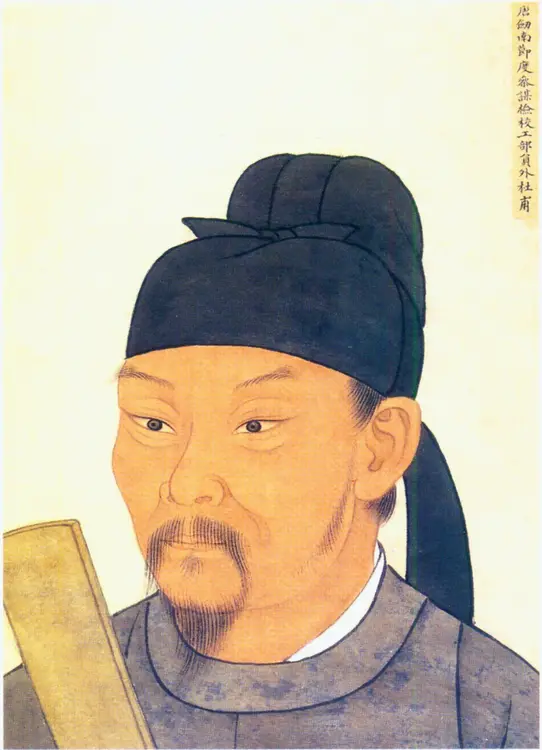

Du (杜) is a Chinese surname meaning “wild pear tree” and, as a verb, “to stop”. It is pronounced dù, like “doo” with a falling tone, and is spelled Tu in Taiwan and in Wade-Giles, To in Hong Kong, Tou in Macao, Toh in Singapore and Malaysia, and Đỗ in Vietnamese. It ranked 42nd among mainland Chinese surnames in 2019 and is best known worldwide as the name of the Tang poet Du Fu.
Meaning of the character 杜
Unihan glosses 杜 as “stop, prevent; restrict; surname”. The verb survives in phrases like 杜绝 (dùjué, “to put an end to”). The tree radical 木 on the left points to the older meaning: 杜 is the Chinese name of Pyrus betulifolia, the birch-leaf pear. The character has 7 strokes and was not simplified.
Origin: the fief of Du near Xi’an
The classic account, quoted in Chinese Wikipedia from Zheng Qiao’s 12th-century Tongzhi, runs as follows. The Tang (唐) clan, of the Qi (祁) surname, claimed descent from the legendary Emperor Yao. When King Cheng of Zhou destroyed their state, he moved the clan to Du (杜城), southeast of modern Xi’an in Shaanxi. Its ruler was known as Du Bo (杜伯), and those who lived in the city took Du as their surname. English sources call this line the Tangdu.
Two other traditions are recorded:
- A Xianbei origin. The Book of Wei says that the three-character Xianbei clan name Duguhun (獨孤渾) was changed to the single surname Du when Emperor Xiaowen of the Northern Wei moved his court to Luoyang.
- Du Kang (杜康), the legendary inventor of wine, is claimed by some families as an ancestor. This is a legend, not a lineage.
The Du clan of the capital region around Chang’an (modern Xi’an) is known as the Jingzhao Du (京兆杜氏), after the commandery it claimed as home. Such regional clan identities are explained in clan associations and hall names.
How Du is spelled
| Spelling | Where | Basis |
|---|---|---|
| Du | Mainland China | Hanyu Pinyin |
| Tu | Taiwan, older English texts | Wade-Giles |
| To | Hong Kong | Cantonese (Jyutping dou6) |
| Tou | Macao | Cantonese, Portuguese-style spelling |
| Toh | Singapore, Malaysia | Hokkien Tō͘ |
| Đỗ (Do) | Vietnam | Sino-Vietnamese reading |
| Du (두) | Korea | Korean reading |
The pinyin letter d stands for an unaspirated t, so Wade-Giles wrote it as t: Du Fu is “Tu Fu” in older books. The Wade-Giles guide explains the pattern. For To and Toh, see the guides to Hong Kong spellings and Hokkien and Teochew spellings.
Du in the United States
The 2010 Census shows how strongly migration history shapes spelling:
- Do: 30,301 people (94.78% Asian or Pacific Islander), mostly Vietnamese Đỗ.
- Tu: 9,230 people (94.03%). Tu is also the pinyin of other surnames, such as 涂.
- To: 8,934 people (95.06%). This total includes Hong Kong families named 杜 and Vietnamese families named Tô, which is a different surname (Su 苏).
- Du: 7,566 people (94.71%).
- Thu (564), Toh (445) and Tou (312) are much rarer.
Even plain “Du” is ambiguous. English Wikipedia notes that, once diacritics are dropped, it can also stand for the Vietnamese surnames Dư or Dũ, which correspond to Chinese Yu (余 and 俞). The Vietnamese surnames guide covers these overlaps, and the surname finder lists every character behind a spelling.
Famous people named Du
- Du Yu (杜預, 222 to 285), Jin dynasty scholar whose commentary on the Zuozhuan became standard.
- Du Ruhui (杜如晦, 585 to 630), chancellor under Emperor Taizong of Tang.
- Du Fu (杜甫, 712 to 770), one of the two great poets of the Tang dynasty with Li Bai, called the “Poet-Historian” and the “Poet-Sage”. Nearly 1,500 of his poems survive.
- Du Mu (杜牧, 803 to 852), late Tang poet. He and Li Shangyin were called the “Little Li-Du”, in contrast to the “Great Li-Du”, Li Bai and Du Fu.
- Toh Chin Chye (杜进才, 1921 to 2012), a founding member and chairman (1954 to 1981) of Singapore’s People’s Action Party, and Deputy Prime Minister from 1959 to 1968.
- Johnnie To (杜琪峯, born 1955), Hong Kong film director (Election, Exiled).
- Đỗ Mười (1917 to 2018), General Secretary of the Communist Party of Vietnam from 1991.
Related surnames and confusions
- Fan (范): English Wikipedia reports that the Fan and Du clans claim a common ancestor.
- 都 Dū: a rare surname also romanized Du.
- Tu: in pinyin texts it is a different surname (涂, 屠); in Wade-Giles texts it is 杜.
- To: Hong Kong 杜 or Vietnamese Tô (蘇).
Data on this page come from the Unihan database, CC-CEDICT and the public 2010 Census surname file; the stroke-order animation uses Hanzi Writer.
Frequently asked questions
What does the surname Du mean?
The character 杜 names the birch-leaf pear, a wild pear tree, and as a verb means to stop or prevent. As a surname it comes from a place name, the ancient fief of Du near Xi'an.
How do you pronounce Du?
Say doo with a short, falling tone: dù. Pinyin d is an unaspirated t sound, which is why Wade-Giles wrote the same name Tu.
Is the Vietnamese surname Do the same as Du?
Đỗ is the Vietnamese reading of 杜, so the written surname is the same. Without diacritics, though, Do can hide other Vietnamese names, so check the full spelling or the character.
Are To and Toh Chinese surnames?
Yes. To is the Hong Kong Cantonese spelling and Toh the Hokkien-based spelling used in Singapore and Malaysia for 杜. To can also be the Vietnamese surname Tô, which is 蘇 Su.
Sources and open data
- Unihan database entry for U+675C 杜, Unicode Consortium
- Frequently Occurring Surnames from the 2010 Census, US Census Bureau
- 杜姓 (Du surname), Chinese Wikipedia
- Du (surname), English Wikipedia
- Du Fu, English Wikipedia
- Du, family name (Q709747), Wikidata