Key facts
- Cai is written 蔡 in both simplified and traditional Chinese (15 strokes, grass radical).
- It comes from the ancient state of Cai, centered on today's Shangcai in Henan, granted by the Zhou to Ji Du, a son of King Wen.
- It ranked 38th in mainland China in 2019 but is far more common in the south: English Wikipedia lists it 9th in Taiwan and 8th in Singapore.
- Spellings: Tsai (Taiwan), Choi / Choy / Tsoi (Cantonese), Chua (Hokkien, Teochew, Philippines), Thái (Vietnamese), Chae (Korean).
- The 2010 US Census counted 10,968 people spelled Tsai, 8,457 Cai and 4,309 Chua.
蔡
Pinyin: Cài
Same character in simplified and traditional: 蔡
Rank in mainland China: 38 of the top 100 (Ministry of Public Security, 2019 report)
Characters and spellings of 蔡
| Unicode code point | U+8521 |
|---|---|
| Stroke count | 15 |
| Radical (simplified form) | No. 140 ⾋, plus 11 strokes |
| Dictionary meaning (Unihan) | surname; species of tortoise |
Romanizations by Chinese language
| Language | System | Spelling |
|---|---|---|
| Mandarin | Hanyu Pinyin (PRC standard) | Cài |
| Mandarin | Wade-Giles (Taiwan, older English texts) | Ts'ai |
| Cantonese | Jyutping (Unihan) | coi3 |
| Cantonese | Hong Kong / common spellings | Choi, Choy, Tsoi, Toy |
| Hokkien (Min Nan) | Pe̍h-ōe-jī and common spellings | Chhoà, Chua |
| Hakka | Pha̍k-fa-sṳ and common spellings | Chhai, Chai, Choi |
| Gan | Romanization and common spellings | Chhói |
| Wu (Shanghainese) | Romanization and common spellings | Tsa |
Equivalent surnames in other languages
| Language | Form |
|---|---|
| Vietnamese | Thái / Sái |
| Korean | Chae (채) |
| Japanese | Sai |
| Can | Chai |
| Filipino | Chua, Choa, Choi, Cai, Tsai |
| Misc | Tsay |
These spellings in the 2010 US Census
| Spelling | People | US rank | Asian / Pacific Islander |
|---|---|---|---|
| CHOI | 50,786 | 674 | 96.09% |
| THAI | 11,644 | 3,089 | 95.61% |
| TSAI | 10,968 | 3,291 | 94.57% |
| CAI | 8,457 | 4,191 | 95.83% |
| TOY | 5,784 | 5,951 | 26.78% |
| CHOY | 5,254 | 6,467 | 75.22% |
| CHUA | 4,309 | 7,702 | 91.13% |
| CHAI | 3,619 | 9,030 | 83.28% |
| TSOI | 857 | 27,974 | 90.55% |
| SAI | 513 | 42,308 | 67.84% |
Counts are people recorded with each spelling among the 265,667,228 people with a surname shared by at least 100 people (US Census Bureau, 2010, public domain). A spelling is not proof of Chinese origin: the last column shows the share of bearers who identified as Asian or Pacific Islander. Together these spellings total 102,361 people, but some of them belong to unrelated surnames (for example English Lee, Hmong Vang or Vietnamese Ly). Search any spelling with the US census surname lookup.
Stroke order
Animation by the open-source Hanzi Writer library (MIT) with stroke data from Make Me a Hanzi (Arphic Public License). Stroke order tool for any character.

Cai (蔡) is a Chinese surname that comes from the ancient state of Cai in Henan. It is pronounced cài, roughly “tsai” (rhyming with “eye”) on a falling tone. It was the 38th most common surname in mainland China in the 2019 official ranking, but it is much more common in the south and overseas: 9th in Taiwan and 8th in Singapore according to English Wikipedia. It is spelled Tsai in Taiwan, Choi, Choy or Tsoi in Cantonese, Chua among Hokkien and Teochew speakers and in the Philippines, Thái in Vietnamese and Chae (채) in Korean.
Meaning of the character 蔡
Unihan glosses 蔡 as “surname; species of tortoise”. The grass radical 艹 on top is the classifying element. The character is the same in simplified and traditional script and has 15 strokes.
Origin: the state of Cai
According to traditional histories, King Wu of Zhou enfeoffed his brother Ji Du (姬度), a son of King Wen, as ruler of Cai around 1046 BC. The state was centered on today’s Shangcai, Zhumadian, Henan. Ji Du, known as Cai Shu Du, joined a rebellion against the regent Duke of Zhou and was exiled. His son was later restored as lord of Cai. Sources disagree on his birth order: the Tongzhi calls him King Wen’s 5th son, the Yuanhe Xingzuan the 14th.
Chu conquered Cai in 447 BC, and its people kept the state’s name as a surname. English Wikipedia describes two later migrations south: during the Huang Chao rebellion in the late Tang, toward Fujian and Guangdong, and with Koxinga’s forces to Taiwan in the 17th century. That explains why Cai is a southern, coastal name today. Chinese Wikipedia says Guangdong alone holds about 15% of mainland Cais.
Spellings and where they come from
| Spelling | Language or place | Example |
|---|---|---|
| Cai | Hanyu Pinyin | Cai Guo-Qiang, artist |
| Tsai | Wade-Giles, Taiwan | Tsai Ing-wen, Jolin Tsai |
| Choi / Choy / Tsoi | Cantonese, Hong Kong, Macau | |
| Toy | Taishanese | |
| Chua / Chuah / Cua | Hokkien, Teochew, Philippines | Amy Chua, Leon Chua |
| Tjoa / Tjhai | Dutch-era Indonesian | |
| Thái | Vietnamese | |
| Chae (채) | Korean |
In the Philippines, some Chua families took Hispanicized names built from the surname and a given name plus -co, such as Chuachiaco, Tuazon or Chuateco. See the Filipino-Chinese surnames guide and the Hokkien and Teochew guide.
Sy is not Cai. Filipino-Chinese Sy usually stands for Shi 施: the SM Group founder Henry Sy was 施至成.
Cai in the United States
The 2010 Census file lists, among others:
- Tsai: 10,968 people, 94.6% Asian or Pacific Islander.
- Cai: 8,457 (95.8%).
- Choy: 5,254 (75.2%) and Tsoi: 857, Cantonese forms.
- Chua: 4,309 (91.1%).
- Thai: 11,644 (95.6%), mostly Vietnamese Thái.
- Toy: 5,784, only 26.8% Asian or Pacific Islander.
Choi (50,786) is the trap: most American Chois are Korean, surnamed 崔, which is Cui in Mandarin. The US census lookup shows all these spellings together.
Famous people named Cai
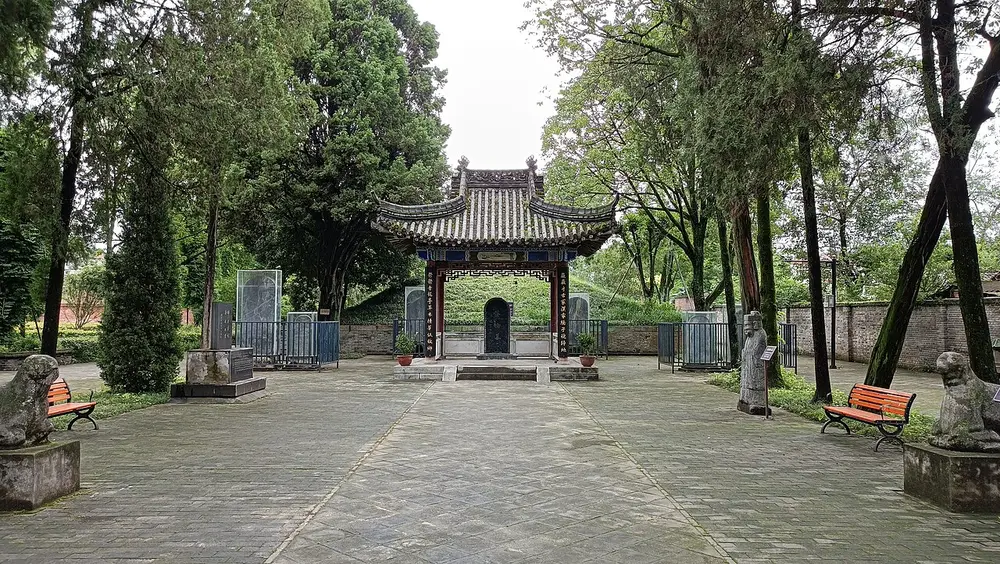
- Cai Lun (蔡伦, 63 to 121), Eastern Han official credited with improving papermaking. His tomb is shown above.
- Cai Wenji (蔡琰, 177 to 249), poet and musician of the late Han.
- Cai Yuanpei (蔡元培, 1868 to 1940), educator and president of Peking University from 1916 to 1927.
- Leon Chua (蔡少棠, born 1936), Philippine-born electrical engineer who predicted the memristor.
- Tsai Ing-wen (蔡英文, born 1956), President of Taiwan from 2016 to 2024.
- Amy Chua (蔡美儿, born 1962), Yale law professor and author.
- Jolin Tsai (蔡依林, born 1980), Taiwanese pop singer.
Related surnames and confusions
- Cui 崔 / Korean Choi: a different name; see Cui.
- Shi 施 / Sy: a different name; see Shi.
- The surname finder lists all characters behind Choi, Chua or Tsai.
Frequently asked questions
How do you pronounce Cai?
Say tsai, rhyming with eye, with a sharp falling fourth tone: cài. The pinyin c is a ts sound, as in cats, never a k.
Is Tsai the same surname as Cai?
Yes. Tsai is the Wade-Giles spelling of 蔡 without its apostrophe (Ts'ai), the standard form in Taiwan, as in Tsai Ing-wen.
Is Chua a Chinese surname?
Yes. Chua is the Hokkien and Teochew pronunciation of 蔡, common in Singapore, Malaysia and the Philippines. Amy Chua and Leon Chua are both 蔡 in Chinese.
Is the Filipino surname Sy the same as Chua?
No. Sy is usually the Hokkien spelling of 施 Shi, as with the businessman Henry Sy (施至成). The Filipino-Chinese spelling of 蔡 is Chua or Cua.
Is Choi a Chinese or Korean surname?
Both, but they are different names. Cantonese Choi is 蔡. Korean Choi (최) is 崔, which is Cui in Mandarin. Korean 蔡 is spelled Chae.
Sources and open data
- Unihan database entry for U+8521 蔡, Unicode Consortium
- Frequently Occurring Surnames from the 2010 Census, US Census Bureau
- Cai (surname), English Wikipedia
- 蔡姓 (the surname Cai), Chinese Wikipedia
- Henry Sy, English Wikipedia
- Tsai Ing-wen, English Wikipedia
- Cai, family name (Q1207872), Wikidata