Key facts
- Ke is written 柯, the same in simplified and traditional script (9 strokes), and pronounced kē, roughly "kuh" with a high level tone.
- The Unihan database glosses the character as axe handle; stalk, bough.
- Tradition traces it to Ke Lu (柯卢), a ruler of the ancient state of Wu, of the royal Ji (姬) clan.
- It is 164th in the Hundred Family Surnames and 111th in the extended 2019 ranking for mainland China. It is common in southern China, Taiwan and Southeast Asia.
- Spellings include Ko (Wade-Giles), O and Or (Hong Kong), Quah, Kua and Kwa (Hokkien, Teochew), Cua and Co (Philippines), Kha (Vietnamese) and Ga (Korean 가).
柯
Pinyin: Kē
Same character in simplified and traditional: 柯
Rank: outside the official top 100
Characters and spellings of 柯
| Unicode code point | U+67EF |
|---|---|
| Stroke count | 9 |
| Radical (simplified form) | No. 75 ⽊, plus 5 strokes |
| Dictionary meaning (Unihan) | axe-handle; stalk, bough; surname |
Romanizations by Chinese language
| Language | System | Spelling |
|---|---|---|
| Mandarin | Hanyu Pinyin (PRC standard) | Kē |
| Mandarin | Wade-Giles (Taiwan, older English texts) | kʻo |
| Cantonese | Jyutping (Unihan) | o1 |
| Cantonese | Hong Kong / common spellings | O, Ngo |
| Hokkien (Min Nan) | Pe̍h-ōe-jī and common spellings | Koa, Ko |
| Hakka | Pha̍k-fa-sṳ and common spellings | Khô |
| Gan | Romanization and common spellings | Ko´ |
| Wu (Shanghainese) | Romanization and common spellings | Khu, Koo |
Equivalent surnames in other languages
| Language | Form |
|---|---|
| Vietnamese | Kha |
| Korean | Ga (가) |
| Japanese | Ka |
| Filipino | Cua, Kua, Kho, Ko, Co, Coson |
These spellings in the 2010 US Census
| Spelling | People | US rank | Asian / Pacific Islander |
|---|---|---|---|
| NGO | 33,005 | 1,062 | 96.46% |
| KO | 13,312 | 2,708 | 93.63% |
| KOO | 4,923 | 6,843 | 90.72% |
| CO | 2,642 | 11,846 | 78.35% |
| KE | 1,890 | 15,494 | 84.76% |
| KHA | 1,408 | 19,257 | 97.66% |
| CUA | 1,082 | 23,485 | 50.09% |
| KHO | 1,063 | 23,785 | 91.53% |
| KOA | 200 | 91,981 | 59.5% |
| KHU | 196 | 93,513 | 95.41% |
Counts are people recorded with each spelling among the 265,667,228 people with a surname shared by at least 100 people (US Census Bureau, 2010, public domain). A spelling is not proof of Chinese origin: the last column shows the share of bearers who identified as Asian or Pacific Islander. Together these spellings total 59,911 people, but some of them belong to unrelated surnames (for example English Lee, Hmong Vang or Vietnamese Ly). Search any spelling with the US census surname lookup.
Stroke order
Animation by the open-source Hanzi Writer library (MIT) with stroke data from Make Me a Hanzi (Arphic Public License). Stroke order tool for any character.

Ke (柯) is a Chinese surname pronounced kē, roughly “kuh” with a high level tone. It is written the same way in simplified and traditional script. It is the 164th name in the Hundred Family Surnames and ranks 111th in the extended 2019 ranking for mainland China. English Wikipedia cites a 2013 study that counted about 1.06 million people named Ke, with the greatest concentration in Hubei. Chinese Wikipedia describes it as widespread in southern China and Southeast Asia, and it is well known in Taiwan. Few surnames have such different spellings: Ko (Wade-Giles), O or Or (Hong Kong), Quah, Kua, Kwa or Koa (Hokkien and Teochew), Cua or Co (Philippines), Kha (Vietnamese) and Ga (Korean 가).
Meaning of the character 柯
柯 combines the tree radical 木 (radical 75) with 可 (kě), which gives the sound. It has 9 strokes and was not changed by simplification. The Unihan database glosses it as “axe-handle; stalk, bough”, senses tied to wood. As a surname it comes from the name of an ancestor, not from these meanings. The pinyin spelling Ke is fairly distinctive, but the dialect spellings overlap with many other names.
Origin: Ke Lu of Wu
Chinese and English Wikipedia list several origins:
| Origin | Period | Story |
|---|---|---|
| Ke Lu (柯卢) of Wu | Zhou dynasty | a ruler of Wu descended from Zhongyong, of the Ji (姬) clan; his descendants took his name |
| the Jiang (姜) clan of Qi | Zhou dynasty | the Lushi names a Ke line among the descendants of Jiang Taigong |
| Keba (柯拔) | Northern Wei | a northern clan that shortened its name to Ke |
| Qiang and Xianbei peoples | various | both peoples had families named Ke |
| Xu (许) families of Changhua | after 1945 | registered as Ke in Taiwan because of a language problem |
The main line is the first. The state of Wu, in today’s Jiangsu, was founded according to tradition by Taibo and his brother Zhongyong, sons of the Zhou ruler King Tai. Chinese Wikipedia, quoting the Guangyun dictionary, says that a five-generation descendant of Zhongyong was named Ke Xiang, and that his great-grandson Ke Lu became ruler; Ke Lu’s descendants made his personal name their surname. This places Ke among the many surnames of the royal Ji clan, together with Wu 吴. See where Chinese surnames come from for how personal names became surnames.
The Xu who became Ke in Taiwan
Chinese Wikipedia records an unusual modern origin. In the coastal area of Changhua County, in Taiwan, some residents whose surname was 许 Xu were registered as 柯 Ke when the new government took over Taiwan’s household records after 1945. The reason was language: the officials worked in Mandarin, the residents spoke Taiwanese Hokkien, and the Taiwanese reading of 许 sounds like the Mandarin reading of 柯. The families kept the new character. For the original surname, see Xu 许, which has its own complicated spellings in Hokkien.
José Rizal and the Cua of the Philippines
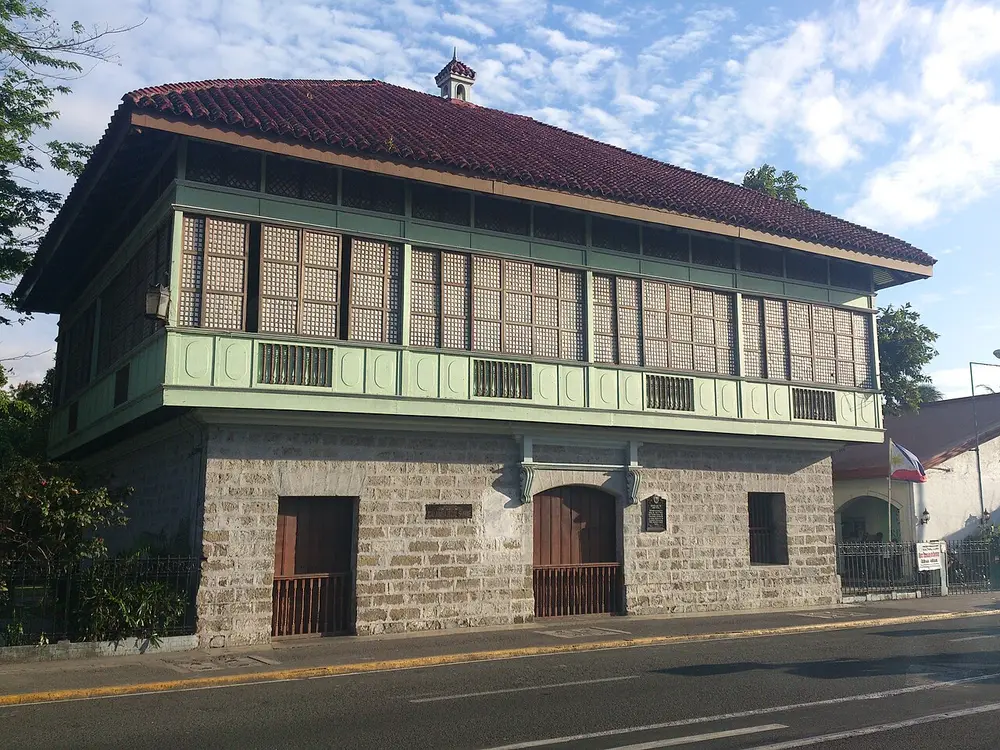
In the Philippines 柯 is spelled Cua, Co or Kho, after Hokkien readings written in Spanish style. English Wikipedia’s article on the surname names Cua Yi Lam, baptized Domingo Lamco, as the paternal ancestor of José Rizal (1861 to 1896), the national hero of the Philippines. The article on Rizal describes this ancestor, Lam-co, as a Chinese merchant from Fujian who came to the Philippines in 1697 and settled in Calamba, Laguna, where Rizal was born. The family later took the Spanish surname Mercado. The Rizal Shrine in Calamba, shown above, is a reproduction of the family house. The guide to Filipino Chinese surnames explains spellings such as Cua and Co.
How Ke is spelled around the world
| Spelling | Language or system | Where you meet it |
|---|---|---|
| Ke | Hanyu Pinyin | mainland China |
| Ko / Ker | Wade-Giles and variants | Taiwan, older books |
| O / Or / Orr | Hong Kong Cantonese (o1) | Hong Kong |
| Koa / Kua | Taiwanese Hokkien | Taiwan |
| Quah / Qua / Kuah / Kua / Kwa | Hokkien, Teochew | Singapore, Malaysia |
| Cua / Co | Hokkien, Spanish style | Philippines |
| Khô | Hakka | Hakka communities |
| Kha | Vietnamese | Vietnam |
| Ga (가) | Korean | Korea |
| Ka | Japanese | Japan |
The spellings fall into two groups: most start with a k sound, from Mandarin and the southern dialects, while the Hong Kong forms start with a vowel, from Cantonese. The Hokkien and Teochew guide and the Hong Kong Cantonese guide explain both.
Ke in the United States
The 2010 US Census counted:
- Ke: 1,890 people (84.8% Asian or Pacific Islander), the pinyin spelling.
- Kha: 1,408 people (97.7%), the Vietnamese spelling.
- Cua: 1,082 people (50.1%), the Filipino Chinese spelling.
- Koa: 200 (59.5%), Kua: 190 (71.1%) and Khu: 196 (95.4%).
Ngo (33,005), Ko (13,312), Koo (4,923), Co (2,642) and Kho (1,063) also appear in the data panel, but these spellings are shared with much larger names. In the United States Ngo is mostly the Vietnamese Ngô, written 吴; Ko is also the Korean spelling of Go 高; and Co and Kho are also Hokkien spellings of 许 Xu. The US census surname lookup shows these overlaps.
Famous people named Ke
- Ke Jiusi (柯九思), painter of the Yuan dynasty.
- Ke Qingshi (柯庆施, 1902 to 1965), senior Communist Party leader.
- Blackie Ko (柯受良), Taiwanese director, actor and stuntman.
- Kwa Geok Choo (柯玉芝), wife of Singapore’s first prime minister, Lee Kuan Yew, an example of the spelling Kwa.
- Ko Wen-je (柯文哲, born 1959), surgeon, mayor of Taipei from 2014 to 2022 and founder of the Taiwan People’s Party.
- Ke Jie (柯洁, born 1997), Go player, ranked world number one from 2014 to 2017.
- Quah Zheng Wen, Singaporean swimmer, an example of the spelling Quah.
Related surnames and pages
- For the surname that became Ke in Changhua, see Xu 许.
- Ke is well known in Taiwan; see the most common surnames in Taiwan.
- The surname finder lists every character behind a spelling such as Ko, Kua or Or.
- See the full ranking in the 100 most common surnames in China.
Frequently asked questions
Is Quah a Chinese surname?
Yes. Quah, Kuah, Qua, Kua and Kwa are Hokkien and Teochew spellings of 柯 used in Singapore and Malaysia. The Singaporean swimmers Quah Zheng Wen and Quah Ting Wen, for example, are written 柯 in Chinese.
Why is 柯 spelled Or in Hong Kong?
In Cantonese the character is read with no initial consonant, o1 in Jyutping. The Hong Kong government spelling writes this as O or Or, so 柯 can look like a completely different name from the Mandarin Ke.
Is Ko always the surname Ke?
No. Ko is the Wade-Giles spelling of 柯 used in Taiwan, as in Ko Wen-je, but it is also the usual Korean spelling of the surname Go (高) and a spelling of other Chinese surnames. Only the character settles the question.
Did some Taiwanese families named Xu become Ke?
According to Chinese Wikipedia, yes. In the coastal area of Changhua County, some residents originally named 许 Xu were registered as 柯 Ke during the household census held after 1945, because of a language problem: the Taiwanese reading of 许 sounds like the Mandarin reading of 柯.
Sources and open data
- Unihan database entry for U+67EF 柯, Unicode Consortium
- Frequently Occurring Surnames from the 2010 Census, US Census Bureau
- Ke (surname), English Wikipedia
- 柯姓 (Ke surname), Chinese Wikipedia
- José Rizal, English Wikipedia
- Ke Jie, English Wikipedia
- Ke, family name (Q986819), Wikidata