Key facts
- Xu 许 (traditional 許) is pronounced xǔ with a third tone. It is a different surname from 徐 Xú, second tone, although both are written Xu without tone marks.
- It was the 26th most common surname in mainland China in 2019 and stands 20th in the Hundred Family Surnames.
- The character means to allow, permit or promise. The surname is traced to the Zhou-era state of Xu, around modern Xuchang in Henan.
- Spellings include Hsu (Wade-Giles), Hui (Cantonese), Koh, Kho, Khoo, Khaw (Hokkien and Teochew), Hứa (Vietnamese) and Heo (Korean).
- The 2010 US Census counted 25,622 Xu and 16,907 Hsu, totals shared with 徐, plus 5,769 Hui and 3,595 Koh.
许
許
Pinyin: Xǔ
Simplified / traditional: 许 / 許
Rank in mainland China: 26 of the top 100 (Ministry of Public Security, 2019 report)
Characters and spellings of 许
| Unicode code point | U+8BB8 (traditional 許: U+8A31) |
|---|---|
| Stroke count | 6 (traditional: 11) |
| Radical (simplified form) | No. 149 ⾔, plus 4 strokes |
| Dictionary meaning (Unihan) | allow, permit; promise; betroth |
Romanizations by Chinese language
| Language | System | Spelling |
|---|---|---|
| Mandarin | Hanyu Pinyin (PRC standard) | Xǔ |
| Mandarin | Wade-Giles (Taiwan, older English texts) | Hsü |
| Cantonese | Jyutping (Unihan) | heoi2 |
| Cantonese | Hong Kong / common spellings | Hui, Hoi |
| Hokkien (Min Nan) | Pe̍h-ōe-jī and common spellings | Khó͘, Koh, Khoh, Ko |
| Hakka | Pha̍k-fa-sṳ and common spellings | Hí, Hee |
| Gan | Romanization and common spellings | Hé |
| Wu (Shanghainese) | Romanization and common spellings | Siu, Syu, Shiu |
Equivalent surnames in other languages
| Language | Form |
|---|---|
| Vietnamese | Hái, Hứa |
| Korean | Heo (허) |
| Japanese | Kyo |
| Filipino | Kho, Ko, Co, Kaw, Cojuangco |
These spellings in the 2010 US Census
| Spelling | People | US rank | Asian / Pacific Islander |
|---|---|---|---|
| XU | 25,622 | 1,381 | 98.25% |
| HSU | 16,907 | 2,147 | 93.78% |
| HE | 15,363 | 2,373 | 95.92% |
| KO | 13,312 | 2,708 | 93.63% |
| HUA | 6,939 | 5,052 | 96.34% |
| HUI | 5,769 | 5,966 | 93.5% |
| SIU | 4,877 | 6,892 | 86.06% |
| KOH | 3,595 | 9,090 | 88.65% |
| CO | 2,642 | 11,846 | 78.35% |
| HEE | 1,157 | 22,281 | 55.83% |
Counts are people recorded with each spelling among the 265,667,228 people with a surname shared by at least 100 people (US Census Bureau, 2010, public domain). A spelling is not proof of Chinese origin: the last column shows the share of bearers who identified as Asian or Pacific Islander. Together these spellings total 99,846 people, but some of them belong to unrelated surnames (for example English Lee, Hmong Vang or Vietnamese Ly). Search any spelling with the US census surname lookup.
Stroke order
Animation by the open-source Hanzi Writer library (MIT) with stroke data from Make Me a Hanzi (Arphic Public License). Stroke order tool for any character.
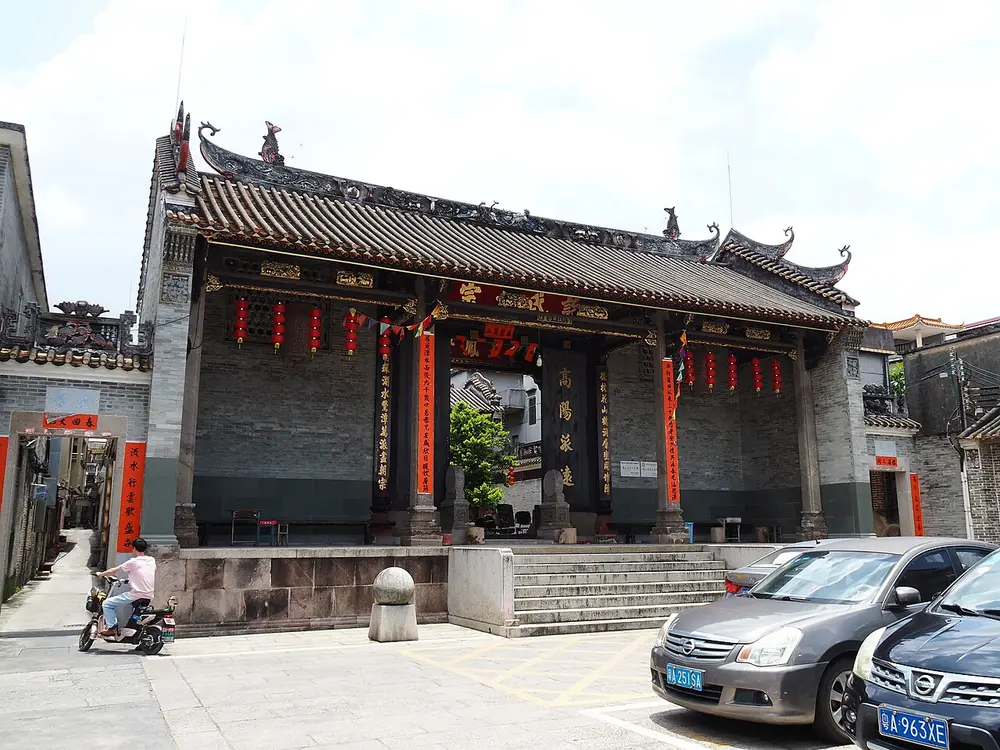

Xu (许, traditional 許) is a Chinese surname meaning “to allow” or “to promise”. It is pronounced xǔ, roughly “shü” with a dipping third tone, and is spelled Hsu in Wade-Giles, Hui in Hong Kong Cantonese, Koh, Kho or Khoo in Hokkien and Teochew, Hứa in Vietnamese and Heo in Korean. It was the 26th most common surname in mainland China in 2019. It is a different surname from 徐 Xú, even though both are written “Xu” without tone marks.
Two surnames called Xu: 许 and 徐
Pinyin without tone marks merges two of the 30 most common Chinese surnames. The table shows how other languages keep them apart:
| 许 / 許 | 徐 | |
|---|---|---|
| Mandarin (pinyin) | Xǔ, third tone | Xú, second tone |
| Wade-Giles | Hsü³ (Hsu) | Hsü² (Hsu) |
| Hong Kong Cantonese | Hui | Tsui |
| Hokkien | Khó͘ (Koh, Khoo) | Chhî (Chee) |
| Vietnamese | Hứa | Từ |
| Korean | Heo (허) | Seo (서) |
| Rank in China, 2019 | 26 | 11 |
So a Hong Kong Hui and a Hong Kong Tsui who both move to Beijing become “Xu”. On passports and in English texts, the only safe identifier is the character. The surname finder lists every character a spelling can stand for, and Chinese names on passports explains why tone marks are dropped.
Meaning of the character 许
The Unihan database glosses 许 as “allow, permit; promise; betroth”. The word is common: 允许 (yǔnxǔ, to allow), 也许 (yěxǔ, perhaps). The traditional form 許 has 11 strokes, the simplified one 6. The difference is the speech radical 言, which simplification reduces to 讠 (radical 149 in both cases), as in hundreds of other characters. See simplified and traditional surname characters.
Origin: the state of Xu
The usual account, given by both the Chinese and English Wikipedia articles, is geographic:
- The state of Xu (许国). After the Zhou conquest of the Shang, King Cheng enfeoffed Xu Wenshu (许文叔), of the Jiang (姜) clan, at Xu, today’s Xuchang in Henan. A text on the Tsinghua bamboo slips, 封许之命, records this enfeoffment. Under pressure from Zheng and Chu the state moved several times and was finally destroyed by Chu in the early Warring States period. Its people took the state’s name as their surname. Because of this Jiang-clan descent, genealogies count Xu as a branch of the same family as Qi 齐.
- Xu You (许由). A legend makes the hermit Xu You, who refused the throne offered him by Emperor Yao, the ancestor of the Xus. Later scholars sometimes merged the two stories by making Xu You the ancestor of the lords of Xu.
Both are traditional accounts. The Chinese article lists Gaoyang (高阳) and Runan (汝南) among the surname’s choronyms, and Gaoyang is still the name used by many Xu clan associations in Southeast Asia, for example in Malaysia.
Spellings in Southeast Asia and beyond
Xu has an unusually wide range of spellings, because large Hokkien and Teochew communities carry it:
- Koh, Kho, Khoh, Ko: Hokkien and Teochew (POJ Khó͘), common in Singapore, Malaysia and Indonesia. See the Hokkien and Teochew spelling guide.
- Khoo, Khor, Khaw: other Penang and Teochew spellings. Note that the famous Khoo Kongsi clan house in Penang belongs to the 邱 (Qiu) clan: Khoo is shared by several surnames.
- Hui, Hoi: Cantonese, see the Hong Kong spelling guide.
- Hii, Hee: Fuzhou (Eastern Min), notably in Sarawak.
- Co, Kho: Philippines.
- Heo, Huh, Hur: Korean. Heo (許) is a native Korean surname with around 264,000 bearers in South Korea in 1985. See Korean surnames and Chinese characters.
Xu 许 in the United States
From the 2010 US Census file:
- Xu: 25,622 people (98.3% Asian or Pacific Islander) and Hsu: 16,907 (93.8%). Both totals include families named 徐 as well as 许.
- Ko: 13,312 (93.6%), largely Korean families named Ko (高), with some Hokkien 许.
- Hui: 5,769 (93.5%); Koh: 3,595 (88.7%); Co: 2,642; Kho: 1,063; Khaw: 345.
The US census analysis explains why spelling counts mix surnames.
Famous people named Xu 许
- Xu Shen (许慎, c. 58 to c. 147), Eastern Han philologist, author of the Shuowen Jiezi, the first dictionary to analyze characters by radical.
- Xu Haifeng (许海峰, born 1957), pistol shooter who won the People’s Republic of China’s first Olympic gold medal, in 1984.
- Michael Hui (许冠文, born 1942) and Sam Hui (许冠杰, born 1948), brothers who shaped Hong Kong comedy and Cantopop.
- Ann Hui (许鞍华, born 1947), Hong Kong film director of the New Wave.
- Feng-hsiung Hsu (许峰雄, born 1959), Taiwanese-American computer scientist behind the Deep Thought chess computer, forerunner of IBM’s Deep Blue.
- Khaw Boon Wan (许文远, born 1952), Singaporean minister of health, national development and transport.
- Kho Ping Hoo (许平和, 1926 to 1994), Indonesian author of martial-arts fiction.
Related pages
- The other Xu: 徐 Xu.
- Browse the 100 most common surnames in China or the Hundred Family Surnames, where 许 is the 20th name.
Frequently asked questions
What is the difference between Xu 许 and Xu 徐?
They are two unrelated surnames. 许 is read xǔ (third tone, falling then rising) and 徐 is read xú (second tone, rising). In Cantonese they are clearly different: Hui for 许 and Tsui for 徐.
What does the surname Xu 许 mean?
The character means to allow, permit or promise, and appears in everyday words such as 也许 (perhaps). As a surname it comes from the ancient state of Xu in Henan, not from that meaning.
How do you pronounce Xu?
Pinyin x is close to English sh, said with the tongue forward, and u after x is the rounded ü sound. So xǔ sounds roughly like shü, with a dipping third tone. It is never ks or zoo.
Is Hui the same as Xu?
Hui is the Hong Kong Cantonese spelling of 许, so Michael Hui and Ann Hui are Xu in pinyin. Hui is also the pinyin spelling of other, rarer surnames such as 惠 Huì.
Is Koh a Chinese surname?
Yes. Koh is a Hokkien and Teochew spelling used in Singapore and Malaysia, most often for 许. It can also stand for other characters such as 高 Gao, so check the Chinese name.
Sources and open data
- Unihan database entry for U+8BB8 许, Unicode Consortium
- Frequently Occurring Surnames from the 2010 Census, US Census Bureau
- 许姓 (Xu surname), Chinese Wikipedia
- 许国 (State of Xu), Chinese Wikipedia
- Xu (surname 許), English Wikipedia
- Heo (Korean surname), English Wikipedia
- Xu, family name (Q993469), Wikidata