Key facts
- Tan is written 谭 in simplified script (14 strokes) and 譚 in traditional script (19 strokes), and pronounced tán, roughly "tahn" with a rising tone.
- Tradition traces it to the ancient state of Tan in western Shandong, conquered by Qi in the 7th century BC. The family later flourished in Hunan.
- It ranks 56th in mainland China in the Ministry of Public Security's 2019 report.
- Abroad, the spelling Tan is a trap: in Singapore, Malaysia, Indonesia and the Philippines it is usually the Hokkien form of Chen 陈, not 谭.
- The usual spellings of 谭 are Tam (Hong Kong, Macau, Philippines), Hom, Thom and Ham (Taishanese), Tham (Malaysia, Singapore), Đàm (Vietnamese) and Dam (Korean 담).
谭
譚
Pinyin: Tán
Simplified / traditional: 谭 / 譚
Rank in mainland China: 56 of the top 100 (Ministry of Public Security, 2019 report)
Characters and spellings of 谭
| Unicode code point | U+8C2D (traditional 譚: U+8B5A) |
|---|---|
| Stroke count | 14 (traditional: 19) |
| Radical (simplified form) | No. 149 ⾔, plus 12 strokes |
| Dictionary meaning (Unihan) | surname; to talk |
Romanizations by Chinese language
| Language | System | Spelling |
|---|---|---|
| Mandarin | Hanyu Pinyin (PRC standard) | Tán |
| Mandarin | Wade-Giles (Taiwan, older English texts) | T'an |
| Cantonese | Jyutping (Unihan) | taam4 |
| Cantonese | Hong Kong / common spellings | Tam, Tom, Ham, Hom |
| Hokkien (Min Nan) | Pe̍h-ōe-jī and common spellings | Thâm, Tham |
| Hakka | Pha̍k-fa-sṳ and common spellings | Thàm, Tham |
| Gan | Romanization and common spellings | Thóm |
| Wu (Shanghainese) | Romanization and common spellings | De, Dae |
Equivalent surnames in other languages
| Language | Form |
|---|---|
| Vietnamese | Đàm |
| Korean | Dam (담) |
| Japanese | Tan |
| Filipino | Tam |
These spellings in the 2010 US Census
| Spelling | People | US rank | Asian / Pacific Islander |
|---|---|---|---|
| TAN | 32,120 | 1,090 | 92.37% |
| HAM | 16,980 | 2,133 | 16.41% |
| TAM | 13,327 | 2,703 | 90.16% |
| TOM | 10,350 | 3,452 | 52.53% |
| THOM | 5,531 | 6,185 | 3.81% |
| HOM | 4,863 | 6,906 | 80.75% |
| THAM | 1,355 | 19,834 | 87.75% |
| DE | 1,123 | 22,809 | 56.81% |
| AM | 343 | 59,017 | 59.77% |
| DAE | 171 | 104,602 | 14.04% |
Counts are people recorded with each spelling among the 265,667,228 people with a surname shared by at least 100 people (US Census Bureau, 2010, public domain). A spelling is not proof of Chinese origin: the last column shows the share of bearers who identified as Asian or Pacific Islander. Together these spellings total 86,163 people, but some of them belong to unrelated surnames (for example English Lee, Hmong Vang or Vietnamese Ly). Search any spelling with the US census surname lookup.
Stroke order
Animation by the open-source Hanzi Writer library (MIT) with stroke data from Make Me a Hanzi (Arphic Public License). Stroke order tool for any character.

Tan (谭, traditional 譚) is a Chinese surname pronounced tán, roughly “tahn” with a rising tone. It ranks 56th in mainland China in the 2019 official list and is especially concentrated in Hunan. Outside the mainland it is spelled Tam (Hong Kong, Macau and the Philippines), Hom, Thom, Ham or Hum (Taishanese), Tham (Malaysia and Singapore), Đàm (Vietnamese) and Dam (Korean 담). The English spelling Tan itself is ambiguous: in Southeast Asia it usually stands for a different surname, Chen 陈.
Meaning of the character 谭
The traditional form 譚 combines the speech radical 言 (radical 149) with 覃 (tán), which gives the sound. In simplified script the speech radical shrinks to 讠, and the stroke count drops from 19 to 14. The Unihan database glosses the character as “surname; to talk”, and in older texts 譚 could indeed mean talk or discussion, a sense now written 谈.
In modern Chinese, 谭 is used almost only as a surname. The idiom 天方夜谭, literally “night tales of Arabia”, is the Chinese title of the Thousand and One Nights and has come to mean a fantastic, unbelievable story. It keeps the old “talk” sense of the character.
Origin: the state of Tan
English and Chinese Wikipedia give two main origins:
| Origin | Period | Story |
|---|---|---|
| state of Tan (譚國) | Zhou dynasty | a small state in western Shandong whose people kept its name |
| the surname 談 | uncertain | a family that changed one character for another to escape enemies |
| non-Han groups | later centuries | families of the southwest who adopted the name |
The first line is the main one. The state of Tan lay in what is now western Shandong, near today’s Zhangqiu, next to the great state of Qi. Chinese genealogies describe its ruling house as part of the Si (姒) clan, the clan of the legendary flood-tamer Yu. During the Spring and Autumn period Qi absorbed Tan, and its former ruling family and subjects adopted the name of their lost state. This is one of the commonest ways Chinese surnames formed, as explained in where Chinese surnames come from.
The second story says that a family named 談, which sounds the same in Mandarin and Cantonese, changed its character to 譚 to avoid a feud. It cannot be dated, but it explains why the two surnames are often linked. English Wikipedia cites a study by the geneticist Yuan Yida finding both surnames concentrated in Hunan, which fits the tradition that the Tan family prospered there after leaving Shandong.
The Tan and Chen trap
Few surnames cause as much confusion in English as Tan. In pinyin it is 谭. But in Hokkien and Teochew, the languages of most Chinese families in Singapore, Malaysia, Indonesia and the Philippines, the very common surname 陈 is read Tân and spelled Tan. Because 陈 is far more common than 谭, a Tan from Singapore or Manila is usually a Chen.
Hokkien speakers read 谭 itself as Thâm, which is why Malaysian and Singaporean families of the 谭 surname spell their name Tham. Amy Tan, the American novelist, is a real 谭 (譚恩美), while most Tans in Southeast Asian business or politics are 陈. The Hokkien and Teochew guide and one surname, many spellings explain how one spelling ends up covering several characters.
How Tan is spelled around the world
| Spelling | Language or system | Where you meet it |
|---|---|---|
| Tan | Hanyu Pinyin | mainland China |
| T’an | Wade-Giles | older books, Taiwan |
| Tam | Cantonese (taam4) | Hong Kong, Macau, Philippines |
| Hom / Thom / Ham / Hum | Taishanese | older Chinese American families |
| Tham | Hokkien, Teochew, Hainanese (Thâm) | Malaysia, Singapore, Indonesia |
| Đàm | Vietnamese | Vietnam |
| Dam (담) | Korean | Korea |
The Taishanese forms are the oldest in North America. Taishan county in Guangdong sent many of the first Chinese immigrants to the United States in the 19th century, and their spelling was fixed long before pinyin existed. See the Hong Kong Cantonese guide and the guide to Filipino Chinese surnames for related forms.
Tan in the United States
The 2010 US Census counted the following spellings, none of which can be read as a count of 谭 alone:
- Tan: 32,120 people (92.4% Asian or Pacific Islander), probably more 陈 than 谭.
- Tam: 13,327 people (90.2%), the Cantonese spelling.
- Tom: 10,350 people (52.5%). Some are Taishanese 谭, but Tom is also a common English name.
- Hom: 4,863 people (80.8%), the clearest Taishanese form of 譚.
- Tham: 1,355 people (87.8%).
Ham (16,980, 16.4% Asian) and Thom (5,531, 3.8%) appear in the data panel too, but they are mostly English names and, for Ham, the Korean surname 함. The US census surname lookup shows these overlaps.
Famous people named Tan
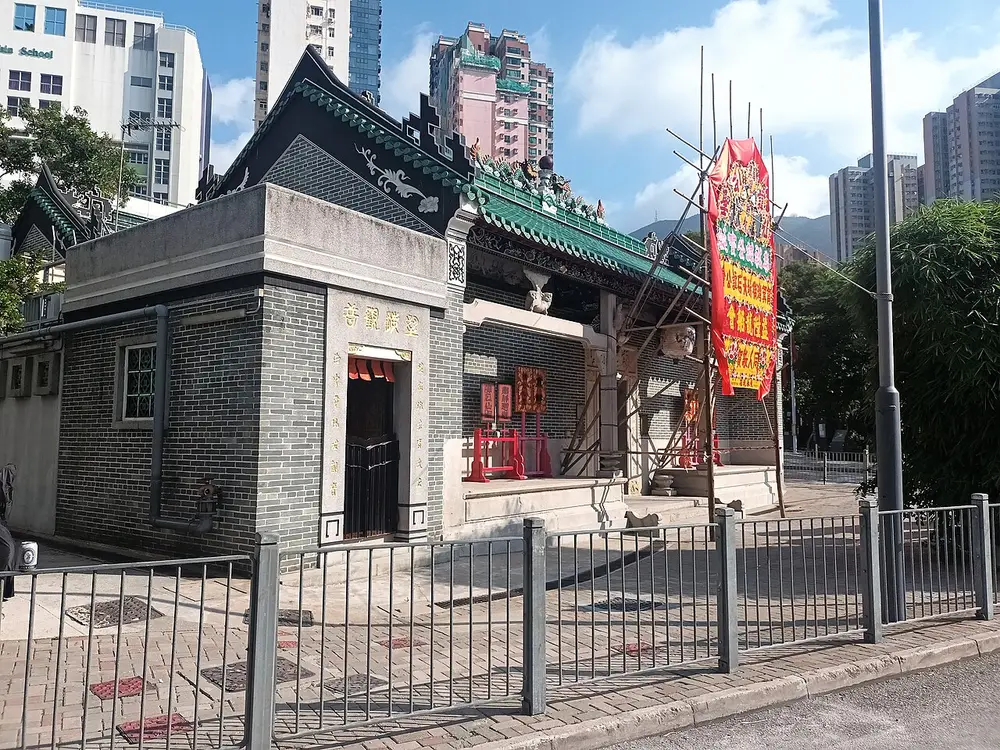
- Tam Kung (譚公), a sea deity of Hong Kong and Macau said to forecast the weather. His temple in Shau Kei Wan is shown above.
- Tan Sitong (谭嗣同, 1865 to 1898), reformer from Hunan, one of the Six Gentlemen executed when the Hundred Days’ Reform failed.
- Amy Tan (譚恩美, born 1952), American author of The Joy Luck Club.
- Alan Tam (譚詠麟, born 1950), Hong Kong singer and actor.
- Tan Dun (谭盾, born 1957), composer, known for the score of Crouching Tiger, Hidden Dragon.
- Vivienne Tam (譚燕玉, born 1957), fashion designer.
- Theresa Tam (born 1965), chief public health officer of Canada from 2017 to 2025.
Related surnames and pages
- For the surname most often spelled Tan in Southeast Asia, see Chen 陈.
- The surname finder lists every character behind a spelling such as Tan, Tam or Hom.
- Vietnamese readings are covered in Vietnamese surnames and Chinese characters.
- See the full ranking in the 100 most common surnames in China.
Frequently asked questions
Is Tan the same surname as Chen?
Often, yes. Tan is the Hokkien and Teochew reading of 陈 Chen, so most people named Tan in Singapore, Malaysia, Indonesia and the Philippines are Chen families. In mainland China, Tan written in pinyin means 谭. Only the Chinese character settles the question.
Is Tam the same surname as Tan?
Tam is the Cantonese spelling of 谭, used in Hong Kong and Macau. So a Tam from Hong Kong and a Tan from Hunan usually share the same character. A Tan from Singapore, however, is usually a Chen.
Why are some Chinese American families named Hom?
Hom, Thom, Ham and Hum come from the Taishanese reading of 譚. Taishan, in Guangdong, sent many of the earliest Chinese immigrants to the United States, so these spellings are older in America than Tan or Tam.
What does the character 谭 mean?
The Unihan database glosses it as surname and to talk. It combines the speech radical 讠 (言) with 覃, which gives the sound. In practice it is used almost only as a surname.
Sources and open data
- Unihan database entry for U+8C2D 谭, Unicode Consortium
- Frequently Occurring Surnames from the 2010 Census, US Census Bureau
- Tan (surname), English Wikipedia
- 谭姓 (Tan surname), Chinese Wikipedia
- Hom (surname), English Wikipedia
- Tan Sitong, English Wikipedia
- Tan, family name (Q2354177), Wikidata