Key facts
- Han is written 韩 in simplified and 韓 in traditional characters: 12 strokes against 17.
- It was the 28th most common surname in mainland China in 2019, about 0.86% of the Han Chinese population, and is the 15th name of the Hundred Family Surnames.
- The main line descends from the ruling house of the state of Han, one of the seven Warring States, conquered by Qin in 230 BC.
- The same character is a major Korean surname (한, Han) and also a name for Korea itself, as in 韩国 (South Korea).
- The 2010 US Census counted 29,847 people named Han, a total that mixes Chinese and Korean families, plus 6,863 Hang and 2,424 Hon.
韩
韓
Pinyin: Hán
Simplified / traditional: 韩 / 韓
Rank in mainland China: 28 of the top 100 (Ministry of Public Security, 2019 report)
Characters and spellings of 韩
| Unicode code point | U+97E9 (traditional 韓: U+97D3) |
|---|---|
| Stroke count | 12 (traditional: 17) |
| Radical (simplified form) | No. 178 ⾱, plus 8 strokes |
| Dictionary meaning (Unihan) | fence; surname; Korea |
Romanizations by Chinese language
| Language | System | Spelling |
|---|---|---|
| Mandarin | Hanyu Pinyin (PRC standard) | Hán |
| Mandarin | Wade-Giles (Taiwan, older English texts) | Han |
| Cantonese | Jyutping (Unihan) | hon4 |
| Cantonese | Hong Kong / common spellings | Hon |
| Hokkien (Min Nan) | Pe̍h-ōe-jī and common spellings | Hân, Hang, Han |
| Hakka | Pha̍k-fa-sṳ and common spellings | Hòn, Hon |
| Gan | Romanization and common spellings | Hón |
| Wu (Shanghainese) | Romanization and common spellings | Ghoe, Reu |
Equivalent surnames in other languages
| Language | Form |
|---|---|
| Vietnamese | Hàn |
| Korean | Han (한) |
| Japanese | Kan |
| Misc | Hang |
These spellings in the 2010 US Census
| Spelling | People | US rank | Asian / Pacific Islander |
|---|---|---|---|
| HAN | 29,847 | 1,182 | 92.67% |
| HANG | 6,863 | 5,101 | 86.64% |
| HON | 2,424 | 12,732 | 36.06% |
| REU | 214 | 86,981 | 6.07% |
Counts are people recorded with each spelling among the 265,667,228 people with a surname shared by at least 100 people (US Census Bureau, 2010, public domain). A spelling is not proof of Chinese origin: the last column shows the share of bearers who identified as Asian or Pacific Islander. Together these spellings total 39,348 people, but some of them belong to unrelated surnames (for example English Lee, Hmong Vang or Vietnamese Ly). Search any spelling with the US census surname lookup.
Stroke order
Animation by the open-source Hanzi Writer library (MIT) with stroke data from Make Me a Hanzi (Arphic Public License). Stroke order tool for any character.
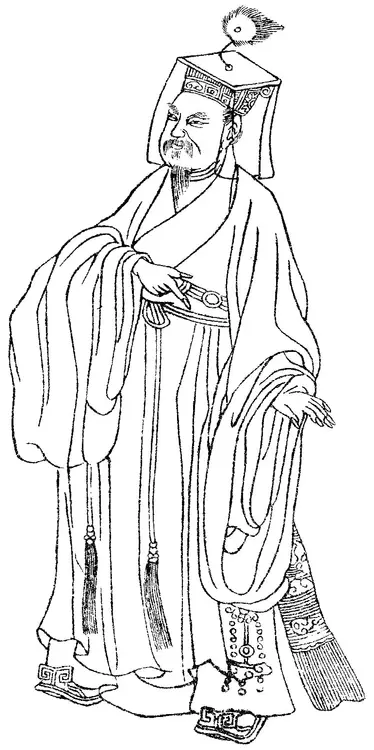

Han (韩, traditional 韓) is a Chinese surname named after the Warring States kingdom of Han. It is pronounced hán, roughly “hahn” with a rising tone, and is spelled Hon in Hong Kong Cantonese, Hang in Hainanese and Hokkien, and Han (한) in Korean, where it is one of the major surnames. It was the 28th most common surname in mainland China in 2019, carried by around 0.86% of the Han Chinese population, mostly in the north.
Meaning of the character 韩
The Unihan database glosses 韩 as “fence; surname; Korea”. The old meaning is the frame or curb around a well. In modern use the character serves almost only three purposes: the surname, the ancient state of Han, and Korea.
The traditional form 韓 has 17 strokes and the simplified 韩 has 12: the right-hand component 韋 (leather, radical 178) is simplified to 韦. Do not confuse it with 漢 / 汉 Hàn, the character of the Han dynasty and the Han Chinese people. That is a different word with a falling fourth tone, and a separate, rare surname.
Origin: the state of Han and other lines
Chinese and English Wikipedia summarize several traditional origins:
- The Warring States kingdom of Han. A descendant of the Zhou royal house (Ji 姬 clan), Han Wan, received the fief of Hanyuan. His descendants built the state of Han, one of the Seven Warring States, centered in today’s Shanxi and Henan. When Qin conquered it in 230 BC, members of the ruling family took Han as their surname. This is the main line, and its first choronym was Yingchuan (颍川), around the old Han capital Yangzhai.
- An earlier Western Zhou state of Han, in today’s Hancheng, Shaanxi, absorbed by Jin.
- Han Liu, a legendary grandson of the Yellow Emperor named in the Classic of Mountains and Seas.
- Non-Han peoples. Under the reforms of Emperor Xiaowen of Northern Wei, the Xianbei clan name rendered 出大汗 was changed to Han. Manchu, Xibe, Oroqen and Mongol clans later adopted Han too. Among the Salar of Qinghai, the four upper clans took the surname Han under the early Ming.
These accounts come from genealogies and early histories. The later choronyms of Nanyang and Changli (昌黎) appear in the Chinese article; the writer Han Yu called himself “Han of Changli”.
Han in Korea
韓 is also a native Korean surname, read Han (한) and also spelled Hahn or Haan. English Wikipedia describes it as the oldest surname in Korea. Korean Hans are divided into clans by ancestral seat (bon-gwan), the best known being the Cheongju Han clan, which provided 16 queens to the Joseon dynasty. The character also names the country: South Korea calls itself 大韓民國 (Daehan Minguk), and Chinese calls it 韩国 (Hánguó).
So “Han” in an English-speaking country can be Chinese or Korean, and the character does not tell you which. The Korean surnames guide explains how Korean surnames map onto Chinese characters.
Spellings
| Spelling | Where it comes from |
|---|---|
| Han | Pinyin, Wade-Giles and Korean (한) |
| Hon | Hong Kong Cantonese (Jyutping hon4) |
| Hang, Han | Hokkien and Hainanese (POJ Hân) |
| Hàn | Vietnamese reading |
| Kan | Japanese on’yomi |
| Hahn, Haan | Korean variant spellings |
Most spellings stay close to “Han”. Cantonese Hon is the main exception, as in the name of Singapore’s finance minister Hon Sui Sen. See the Hong Kong Cantonese spelling guide.
Han in the United States
From the 2010 US Census file:
- Han: 29,847 people (92.7% Asian or Pacific Islander), rank 1,182. This total mixes Chinese and Korean families and cannot be split by origin.
- Hang: 6,863 (86.6%). Hang is also a Hmong clan name, so many American Hangs are Hmong, not Chinese.
- Hon: 2,424, of whom only 36.1% are Asian or Pacific Islander: most American Hons are not Cantonese 韓.
The US census analysis and the census lookup tool give comparable figures for every surname.
Famous people named Han
- Han Fei (韩非, c. 280 to 233 BC), prince of the state of Han and the leading philosopher of Legalism.
- Han Xin (韩信, died 196 BC), general who won the empire for the founder of the Han dynasty.
- Han Yu (韩愈, 768 to 824), Tang essayist and poet, leader of the Classical Prose Movement. After his eight months as prefect of Chaozhou in 819, local people renamed the river there the Han River (韩江) in his honor.
- Hon Sui Sen (韩瑞生, 1916 to 1983), Singapore’s Minister for Finance from 1970 to 1983.
- Han Kuo-yu (韩国瑜, born 1957), Taiwanese politician, President of the Legislative Yuan.
- Han Han (韩寒, born 1982), writer and rally driver from Shanghai.
Distribution in China
The Chinese Wikipedia article places most Hans in the north: Henan, Shaanxi, Shandong, Shanxi and Hebei, with smaller southern concentrations in Jiangsu, Anhui, Zhejiang and Guangdong. English Wikipedia cites about 8 million bearers in 2003.
Related pages
- Where Chinese surnames come from: state names like Han are one of the main sources.
- 曹 Cao is another surname named after a Zhou-era state.
- Han is the 15th name of the Hundred Family Surnames.
Frequently asked questions
Is Han a Chinese or Korean surname?
Both. The character 韓 is a common surname in China and in Korea, where it is read 한 Han. The two populations have separate clan histories, so a Korean Han is not usually of Chinese descent.
Is the surname Han related to the Han Chinese or the Han dynasty?
No. The Han dynasty and the Han people are written 漢 (hàn, fourth tone). The surname is 韓 (hán, second tone), named after the Warring States kingdom of Han.
How do you pronounce Han?
In Mandarin it is hán, with a rising tone and the a of father, so roughly hahn. The h is a little rougher than in English, closer to the ch of Scottish loch.
What does the character 韩 mean?
Unihan glosses it as fence, surname and Korea. Its old meaning is the wall or curb around a well; in practice it is used almost only for the surname, the ancient state and Korea.
Sources and open data
- Unihan database entry for U+97E9 韩, Unicode Consortium
- Frequently Occurring Surnames from the 2010 Census, US Census Bureau
- 韩姓 (Han surname), Chinese Wikipedia
- Han (Chinese surname), English Wikipedia
- Han (Korean surname), English Wikipedia
- Han, family name (Q717767), Wikidata